
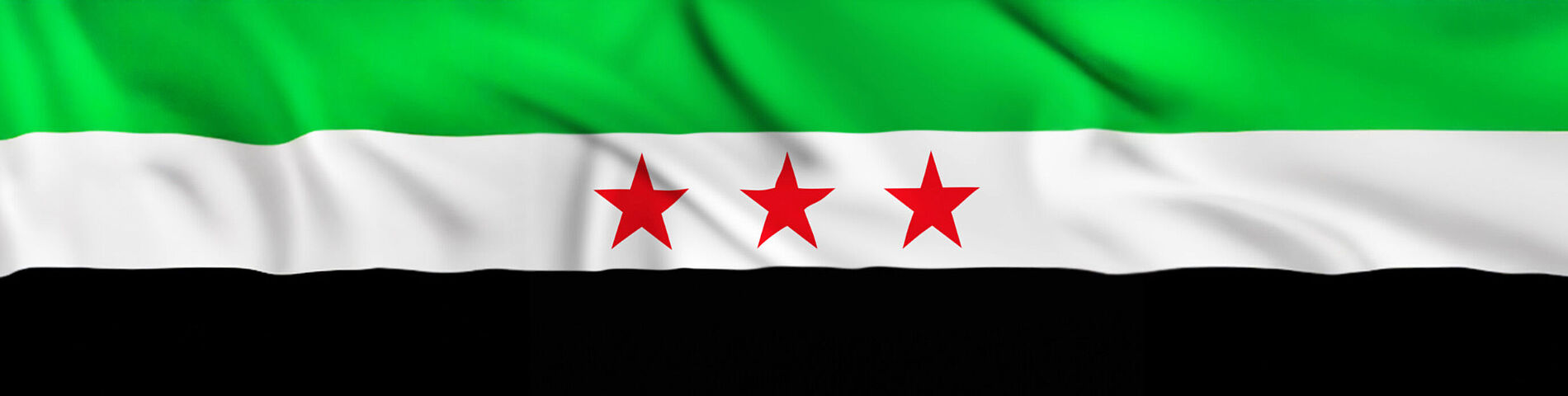
InfoDesk Syria
With the InfoDesk Syria, we are currently setting up a cross-sector information and advisory service for companies interested in getting involved in the context of Syria’s economic reconstruction. We provide advice on funding and financing options as well as on networking opportunities for entering the Syrian market. In addition, we are currently developing an advisory service for participation in international tenders in Syria.
Syria at a glance
After thirteen years of war, Syria has reached a potential turning point. Years of conflict have destroyed the economy and infrastructure. 90 per cent of the population relies on humanitarian assistance. The task now is to support Syria in stabilising and in rebuilding the country’s economy.
According to a World Bank report, the cost of rebuilding the country is around USD 216 billion (EUR 188 billion), and a third of Syria’s capital stock has been destroyed. Reconstruction will require almost ten times Syria’s GDP for 2024 and can be achieved only through international support and coordinated measures. Since 2010, Syria’s real economic output has plummeted by over 50 %.
After years without diplomatic representation in Syria, the German embassy in Damascus was reopened in March 2025. The German Government is committed to the reconstruction and recovery of Syria’s economy. Measures are planned in the areas of health, infrastructure, education, water, economic development, strengthening administrative structures, and the rule of law. At the same time, civil society is to be strengthened to promote participation in the political transition process. BMZ is currently preparing further measures for 2026 to support a new beginning for society in Syria.
Opportunities and risks for businesses
In May 2025, the member states of the European Union decided to lift all economic sanctions on Syria, including measures imposed on the Central Bank of Syria and core sectors such as energy and finance. However, access to international banking is still restricted, and this continues to hamper humanitarian assistance as well as trade and investment.
For German economic actors wishing to operate in Syria, there are opportunities in areas such as infrastructure, energy, health care, water and agriculture – but in an environment characterised with significant uncertainty. Careful market entry and risk assessment, reliable local partners and coordination with the German Government’s development and foreign policy framework are crucial.
The German Government is not yet providing any export or investment guarantees.
Selected tenders
Sanctions, legislation and compliance
To a large extent, Council Regulation (EU) 2025/1098 dated 27 May 2025 lifted the economic sanctions imposed on Syria in (EU) Nr. 36/2012 (Syria sanctions regime). With the exception of measures for security reasons, this concerns all sector-specific restrictive measures.
With Implementing Regulation (EU) 2025/1094 dated 27 May 2025, the Council removed many people and organisations previously listed in Annex II of Regulation (EU) 36/2012.
However, in practical terms, there are still some significant challenges. Although central banks in Syria are currently no longer on the sanctions lists, there are still no options for transferring money directly to Syria.
The German Federal Office for Economic Affairs and Export Control provides an up-to-date overview of the embargo restrictions: BAFA - Syria (German only)
The US sanctions of the Caesar Syria Civilian Protection Act (commonly known as the Caesar Act) of 2019 were lifted in December 2025. Syria was also removed from the list of state sponsors of terrorism in August 2026.
In order to cooperate with economic actors from Syria, this means that a sanctions check of partners and their key actors is absolutely essential. In addition, a sanctions clause is to be included in cooperation and financing agreements to ensure that economic partners comply with sanctions.
To clarify legal questions and for authorisation procedures, we recommend contacting the German Federal Office for Economic Affairs and Export Control (export of goods) and the Deutsche Bundesbank (financial sanctions). For further information, specialised online tools on EU, UN and US sanctions can be used. It is advisable to obtain legal advice from experts.
Need support with EU sanctions compliance?
For companies considering business activities in Syria, understanding whether and how EU sanctions may apply to a specific business relationship or transaction can be challenging. This can be particularly demanding for small and medium-sized enterprises (SMEs) that may not have dedicated sanctions expertise in-house.
The EU Sanctions Helpdesk, funded by the European Union, provides free-of-charge practical support to EU SMEs navigating EU sanctions and carrying out sanctions due diligence.
Through its Support Service, SMEs can receive personalised assistance with general sanctions compliance questions, support in assessing specific parties involved in a transaction, understanding whether a particular action or transaction may be affected by EU sanctions, as well as questions related to the application of sanctions in specific country contexts.
When submitting a request, companies may be asked to provide information covering the Helpdesk’s Four Keys to Compliance:
- Who – the counterparty and/or any other parties involved in the transaction;
- What – the goods or services involved;
- Where – the locations and jurisdictions through which goods, services or related payments may transit;
- What for – the intended end-use and end-user.
EU SMEs can submit their questions directly to the EU Sanctions Helpdesk Support Service to receive tailored support on their case.
Beyond individual support, the Helpdesk also offers training and events specifically designed for SMEs, helping businesses strengthen their understanding of EU sanctions and put sanctions due diligence into practice.
Get support from the EU Sanctions Helpdesk: https://eu-sanctions-compliance-helpdesk.europa.eu
Security and practical information
The security situation in Syria and the region remains volatile. Please check the Website of the German Federal Foreign Office for the latest developments (German only).
Further links
Funding and programmes
Hospital partnerships in Syria
With its Hospital Partnerships – Partners Strengthen Health funding programme, the German Federal Ministry for Economic Cooperation and Development, together with the Else Kröner-Fresenius Foundation, supports hospital partnerships between health care facilities in Germany and those in low-income and middle-income countries. Special funding for Syria is aimed at partnerships between German non-profit health care institutions or non-governmental organisations and Syrian partner institutions in the health care sector.
The develoPPP programme run by the German Federal Ministry for Economic Cooperation and Development (BMZ) promotes the involvement of companies wishing to invest sustainably in a developing country or an emerging economy and expand their local operational activities. Prerequisites for support are a long-term business interest in the country and sustainable development benefits for people locally.
The Ouissal mentoring programme connects young and experienced businesswomen in Arab-German tandems for a joint learning process and intercultural exchange. AWE is assisting Ouissal, for example with communication and marketing for the programme.
Platform "A New Beginning for Syria"
The platform "A New Beginning for Syria" platform is an initiative of the Federal Ministry for Economic Cooperation and Development (BMZ). It is directed at non-governmental actors based in Germany who wish to contribute to Syria’s recovery and reconstruction. The platform serves as a forum for technical dialogue, exchange of experiences, and mutual networking. As of December 2025, it brings together more than 1,300 participants.
Partners and networks
GTAI offers information on investment opportunities, country and sector analyses and access to tenders worldwide (German only).