India – perseverance pays off
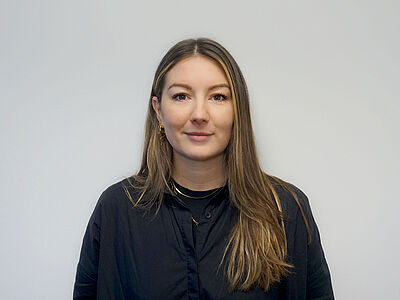
India offers small and medium-sized enterprises a range of promising future markets – and is becoming a stronger focus thanks to the new free trade agreement with the EU. As a Business Scout for AWE at the German Chamber of Commerce Abroad (AHK) in Mumbai, Martha Scheifel connects companies with development cooperation partners, advises them and develops joint initiatives. In this interview, she sets out the opportunities available to German SMEs in India and explains specifically how AWE and AHK provide support.
Free trade agreements and market opportunities for SMEs
Editorial team: Ms Scheifel, the EU and India agreed on a free trade agreement in early 2026. What signal does this agreement send to the German business community?
Martha Scheifel: That’s right. In early 2026, the EU and India agreed on a free trade agreement – although it has yet to be signed. The plan is for the agreement to come into force in 2027 and for it to facilitate trade between India and the EU by reducing tariffs, making regulatory frameworks more reliable and procedures more transparent. For businesses, this means that the trade agreement could be an important door-opener. At the same time, expectations should remain realistic – we will only see how significantly trade changes once this free trade area actually comes into force.
Editorial team: Why is it particularly worthwhile for German SMEs to invest in India?
Martha Scheifel: India is the fastest-growing major economy: the International Monetary Fund and the World Bank forecast growth rates of up to seven per cent. With a population of around 1.5 billion, India is the world’s most populous country – with a high proportion of the population under the age of 30. These people need housing, energy, transport, health care, education and digital services. Furthermore, many companies want to reduce their dependence on individual markets and diversify their supply chains. They see India as a complement or alternative to China, as the country is considered a relatively stable partner. More than 2,000 German companies are operating in the country already, primarily in the automotive and supplier industries, the chemical and pharmaceutical sectors, and in mechanical engineering and electrical engineering. SMEs entering the market for the first time can make use of these structures.
Editorial team: India is a rather price-sensitive market. How can German companies position themselves effectively here?
Martha Scheifel: The greatest opportunity is in specialisation: the fewer comparable offerings there are in India, the better German companies can assert their added value in the market.
At the interface with development cooperation, it is worth specifically seeking out niches where business interests and local needs coincide. If a company has project ideas or identifies gaps where both its own operations and local people or the environment can benefit, I am the right point of contact in India.
This can take many different forms. For example, a large number of data centers are currently under construction in India—if these operators wish to develop initiatives for energy reduction, they could get in touch with us. In such cases, I help to turn initial ideas into eligible projects and find suitable instruments of German development cooperation.
Characteristics of Indian business culture
Editorial team: Which regions are particularly attractive?
Martha Scheifel: As a financial and economic hub, Mumbai is often the logical starting point. In the automotive sector, the greater Pune area has emerged as an important cluster. A host of German manufacturers and suppliers are based there, along with engineering service providers, industry associations and skilled workers. The IT and digital sector is heavily concentrated in Bangalore, Hyderabad, Pune and Chennai. These cities have major universities, many start-ups and international tech companies.
Editorial team: How does Indian business culture differ from German business culture? What should companies bear in mind?
Martha Scheifel: In India, personal relationships are even more important. In meetings, for example, people sometimes also talk about their family or plans for the holidays or the weekend. These conversations serve to build trust. I often find that stable business relationships develop where partners are equals – both personally and professionally.
Another difference is the approach to time: when doing business in India, you sometimes need to have a bit of patience. Applying for permits and visas can take time. At the same time, however, things can then move very quickly. A roundtable with many high-ranking company representatives, which in Germany would take several months to plan, can sometimes be organised here in two weeks.
Companies benefit from long-term relationships on an equal footing.
Editorial team: How do companies specifically benefit from the on-site services?
Martha Scheifel: AHK India is the largest bilateral German Chamber of Commerce Abroad, with headquarters in Mumbai and six further offices in India, and a representation in Germany. From here, I liaise with companies, associations and organisations and develop a network. At the same time, I act as a liaison with AWE, and if, for example, a medical technology company approaches AWE for advice, I bring in colleagues from the relevant department there. We then work together to identify suitable regions, assess which approval and regulatory issues are relevant, and determine whether any funding schemes might be applicable. I then put the company in touch with specific local contacts or explore whether we can take other action ourselves.
Editorial team: What do you personally value most about India?
Martha Scheifel: India is incredibly dynamic and diverse. I meet many intelligent and committed people here who are keen to actively drive change. In India, social and corporate responsibility may not always mean sustainability, but it’s often factored into the potential business risks instinctively. People are often very open; you strike up a conversation quickly and there’s a strong willingness to help one another. I find Mumbai especially fascinating. Many people don’t realise that the city has the second-highest number of Art Deco buildings in the world after Miami. When you walk through the streets and look at this architecture, you get a sense of just how multifaceted this country and this city are.
Editorial team: What message would you like to give to medium-sized companies that are considering business relationships with India?
Martha Scheifel: India is and will remain a very important partner for German companies. With the free trade agreement and its strong growth momentum, India will play an increasingly important economic role in the coming years. Entering the market can require perseverance, but it’s worth sticking with it: companies benefit from stable partnerships and long-term relationships on an equal footing.
About the author
Martha Scheifel works as a Business Scout at the German Chamber of Commerce and Industry (AHK) in Mumbai. In this role, she supports the sustainability team and advises companies on market entry strategies in India, on cooperation and funding opportunities within development cooperation, and on integrating climate, environmental and social standards into business models.
Published on