New markets don’t create themselves
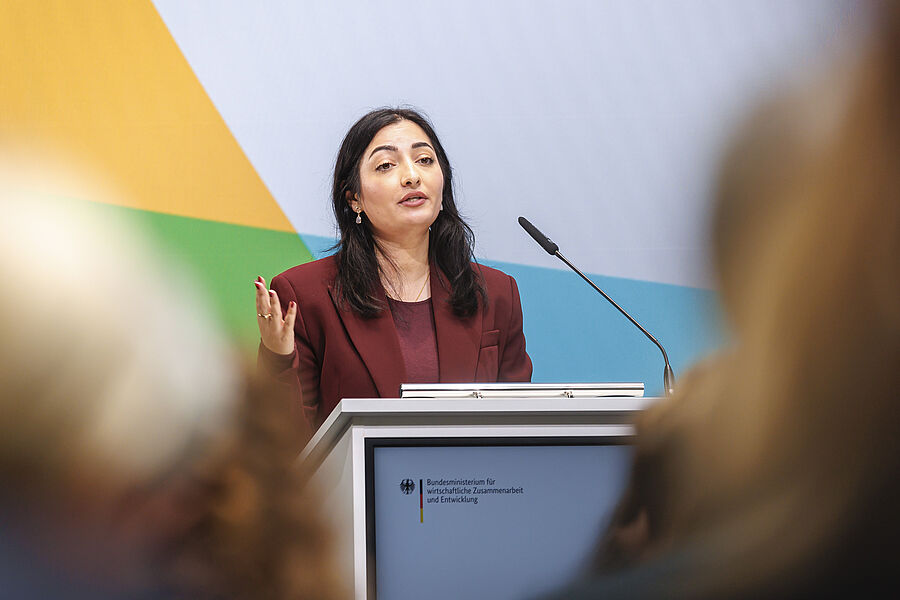
Michael Krake has headed the Economic Cooperation Directorate within the German Federal Ministry for Economic Cooperation and Development (BMZ) for around two months now. The editorial team talked to him about interest-driven development cooperation – and what it means for small and medium-sized enterprises (SMEs).
Editorial team: German interests have recently started to play a greater role in development cooperation. What does that mean in concrete terms for German SMEs?
Krake: German interests are highly varied and can very often be aligned with those of developing countries. After all, developing countries value German quality and technology. We should capitalise on that to ensure that an appropriate share of German companies are awarded international contracts. Likewise, supply chain resilience, resource security and energy security in Germany can go hand in hand with greater value creation and more jobs in developing countries. Key future markets for sales and investment can therefore also be found on our neighbouring continent of Africa. And we will only be able to resolve the skilled labour shortage in Germany by working together with selected developing countries and emerging economies.
Editorial team: Many SMEs say that international markets are too risky and too complex. What would you say to them?
Krake: I am increasingly meeting SMEs which see the opportunities and not just the risks of tapping into new markets. Particularly because, from both a business and a wider economic perspective, it is becoming more important to reduce dependencies on individual trading partners. And the German SME sector already includes successful global leaders, or ‘hidden champions’, which we hope will inspire others to follow in their footsteps. Naturally, companies ultimately need to weigh up the opportunities and risks themselves. Development policy can support them in this by sharing its specialised knowledge of new markets, networks, and of course also financing.
Editorial team: SMEs often have limited resources for international expansion. How do you ensure that small companies, specifically, benefit from development cooperation – not just large corporations?
Krake: With the programmes that it has brought together under the umbrella of Partners in Transformation, BMZ is launching concrete projects, helping to dismantle investment barriers, and creating financing options. BMZ involves companies in this with the specific aim of working with them to reduce risks and open up new opportunities. And through advisory services, networking and access to attractive financing arrangements, BMZ also supports German companies – especially SMEs – in gaining market access in our partner countries.
Editorial team: Many companies view sustainability requirements as an additional burden. Don’t they make it even more difficult to enter new markets?
Krake: No. Sustainable business practices are actually a hallmark of German and European companies, and are often the key to ensuring quality, managing resources efficiently, and achieving long-term business success. It’s not usually the requirements that companies criticise so much as the work it takes to prove that the requirements have been met.
Editorial team: Entrepreneurs often ask what specific business opportunities exist. Can you provide some specific examples?
Krake: BMZ supports companies that want to invest sustainably in a developing country or emerging economy and expand their local operations. But that’s not all – projects with companies in BMZ’s partner countries can also use German key technologies and introduce improved product and production standards. This enables us to create real added value, for the German and European private sector too. In 2025, Partners in Transformation projects mobilised EUR 565 million in private investment – made possible by the use of public funds. This results in cooperative arrangements that open up economic opportunities while also advancing development.
Editorial team: What would you say to an SME that is still hesitant to become active internationally?
Krake: I would advise them to talk to successful international entrepreneurs. I find that more convincing than advice from the public sector.
Editorial team: Critics say that development cooperation is being relabelled as economic development. What would you say to them?
Krake: Improving the interplay between foreign trade promotion and development cooperation does not mean that we are abandoning our core development policy mandate. Our partners in developing countries are also calling, above all, for more economic cooperation.
Editorial team: How will you gauge whether this realignment of development cooperation is a success?
Krake: There is probably no other area of policymaking that is evaluated as thoroughly as development cooperation. So I am certain that, in a few years, independent institutions will evaluate how successful we have been in making development cooperation more focused, strategic and partnership-based. Particularly at a time when resources are scarce, Germany is targeting its investment at areas where development policy and the private sector are working together and genuine partnerships are emerging. Working together is how we can achieve the greatest impact – both for the people in our partner countries and for people in Germany.
Partnerships are emerging that open up economic opportunities whilst also driving development forward.
Redaktion: Viele Unternehmen empfinden Nachhaltigkeitsanforderungen als zusätzliche Belastung. Wird der Einstieg in neue Märkte dadurch nicht noch schwieriger?
Krake: Nein. Nachhaltiges Wirtschaften ist vielmehr ein Markenzeichen deutscher und europäischer Unternehmen und oft zentraler für Qualität, effizientem Ressourceneinsatz und langfristigen unternehmerischen Erfolg. Was Unternehmen kritisieren, sind meist nicht die Anforderungen. Kritisch gesehen wir eher der Aufwand, der damit verbunden ist, zu belegen, dass man den Anforderungen gerecht wird.
Redaktion: Aus Sicht von Unternehmern stellt sich oft die Frage: Wo liegen konkret die Geschäftschancen? Können Sie das greifbar machen?
Krake: Das BMZ unterstützt Unternehmen, die nachhaltig in einem Entwicklungs- oder Schwellenland investieren und ihre operative Tätigkeit vor Ort ausbauen wollen. Aber nicht nur das - auch Projekte mit Unternehmen in den Partnerländern des BMZ können deutsche Schlüsseltechnologie einsetzen, verbesserte Produkt- und Produktionsstandards einführen. So schaffen wir einen konkreten Mehrwert auch für die deutsche und europäische Wirtschaft. Durch Projekte der „Partners in Transformation“ wurden 2025 private Investitionen in Höhe von 565 Millionen Euro angestoßen – ermöglicht durch den Einsatz öffentlicher Mittel. So entstehen Kooperationen, die wirtschaftliche Chancen eröffnen und gleichzeitig Entwicklung voranbringen.
Redaktion: Was würden Sie einem mittelständischen Unternehmen sagen, das noch zögert, international aktiv zu werden?
Krake: Ich würde ihnen raten, mit international erfolgreichen Unternehmerinnen und Unternehmern zu sprechen. Das finde ich überzeugender als Ratschläge der öffentlichen Hand.
Redaktion: Kritiker sagen, Entwicklungszusammenarbeit werde zur Wirtschaftsförderung umetikettiert. Was entgegnen Sie?
Krake: Nur weil wir das Zusammenspiel von Außenwirtschaftsförderung und Entwicklungszusammenarbeit verbessern, geben wir nicht unser entwicklungspolitisches Kernmandat auf. Auch unsere Partner in Entwicklungsländern fordern vor allem mehr wirtschaftliche Zusammenarbeit.
Redaktion: Woran werden Sie messen lassen, ob diese Neuausrichtung der Entwicklungszusammenarbeit erfolgreich ist?
Krake: Es gibt kaum ein anderes Politikfeld, das so gründlich evaluiert wird wie die Entwicklungszusammenarbeit. Von daher bin ich sicher, dass unabhängige Institutionen in einigen Jahren bewerten werden, wie gut es gelungen ist, die Entwicklungszusammenarbeit fokussierter, strategischer und partnerschaftlicher aufzustellen. Gerade in Zeiten knapper Ressourcen investiert Deutschland gezielt dort, wo Entwicklungspolitik und Wirtschaft zusammenwirken und echte Partnerschaften entstehen. Denn gemeinsam erzielen wir die größte Wirkung – für die Menschen in unseren Partnerländern ebenso wie für die Menschen in Deutschland.
Germany invests where development policy and the economy work together.
Redaktion: Kritiker sagen, Entwicklungszusammenarbeit werde zur Wirtschaftsförderung umetikettiert. Was entgegnen Sie?
Krake: Nur weil wir das Zusammenspiel von Außenwirtschaftsförderung und Entwicklungszusammenarbeit verbessern, geben wir nicht unser entwicklungspolitisches Kernmandat auf. Auch unsere Partner in Entwicklungsländern fordern vor allem mehr wirtschaftliche Zusammenarbeit.
Redaktion: Woran werden Sie messen lassen, ob diese Neuausrichtung der Entwicklungszusammenarbeit erfolgreich ist?
Krake: Es gibt kaum ein anderes Politikfeld, das so gründlich evaluiert wird wie die Entwicklungszusammenarbeit. Von daher bin ich sicher, dass unabhängige Institutionen in einigen Jahren bewerten werden, wie gut es gelungen ist, die Entwicklungszusammenarbeit fokussierter, strategischer und partnerschaftlicher aufzustellen. Gerade in Zeiten knapper Ressourcen investiert Deutschland gezielt dort, wo Entwicklungspolitik und Wirtschaft zusammenwirken und echte Partnerschaften entstehen. Denn gemeinsam erzielen wir die größte Wirkung – für die Menschen in unseren Partnerländern ebenso wie für die Menschen in Deutschland.
Profile
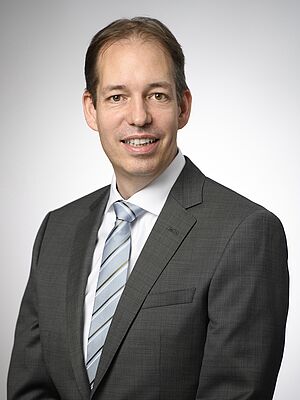
Michael Krake is a seasoned economist specialized in international cooperation and development with over 20 years of experience in public policy, diplomacy, and the private sector.
He currently serves as Deputy Director General for Economic Cooperation in the German Federal Ministry for Economic Cooperation and Development (BMZ).
From 2022 to 2025 he was based in Washington DC as the World Bank Group Executive Director for Germany. He was Vice Chair of the development effectiveness committee and member of the budget committee.
Previously, he held various leadership positions in the German Federal Ministry for Economic Cooperation and Development (BMZ). He was Acting Director-General for Global Health, Private Sector, Trade and Rural Development; and Deputy Director-General for Private Sector, Trade, Employment and Digital Technologies. He also served as Chief of Political Staff from 2016 to 2018.
From 2007 to 2012 he lived and worked for the German Government as Head of Cooperation in Uganda and regional coordinator on drought resilience in Kenya. Michael Krake is a member of the expert commission “Germany and the Global South” initiated by Global Perspectives Initiative, Germany.
Before joining the German Government, he worked as management consultant for McKinsey & Company. He attended university in Bonn (Germany) and New York (U.S.A.) and is a graduate economist.
Published on