From skilled worker shortage to partnership
AWE connects companies with German development cooperation programmes, GIZ and local partners; provides advice on funding opportunities; and supports the establishment of partnership projects - in Kenya, for example. German companies work with local partners there to train young skilled workers for jobs in Germany.
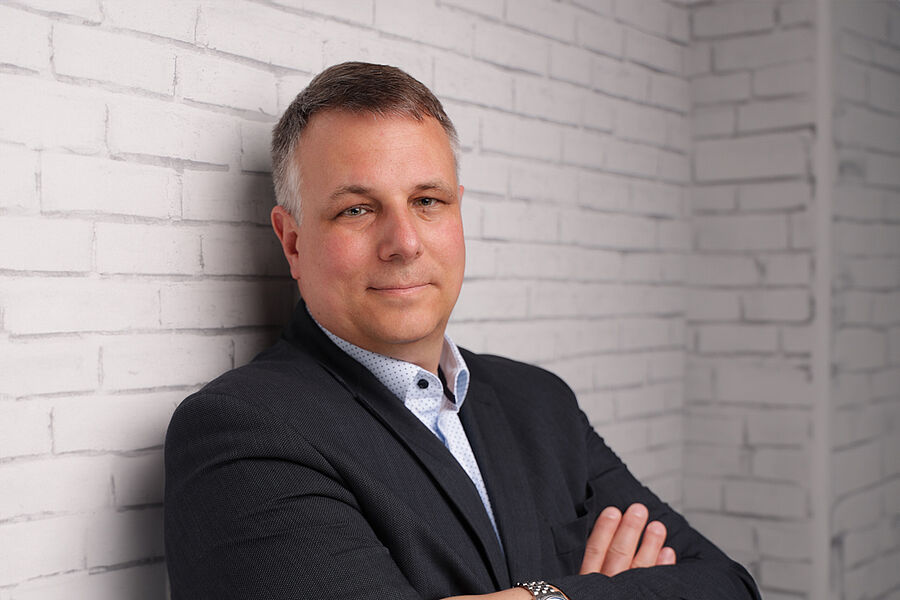
By Oliver Wagener, Business Scout at the Agency for Business and Economic Development at the Düsseldorf Chamber of Commerce and Industry
Since last year, Julius Kalume, a Kenyan national, has been living in Nuremberg, where he helps plan photovoltaic systems. He is part of the first group of young Kenyan engineers to participate in a training programme initiated by a private company. He then went to Germany - fully trained and with an unlimited-term employment agreement in his pocket. I didn’t choose this example at random: Kenya is one of our most important partner countries in the field of skilled worker training, including for regular labour migration to Germany.
AWE is very active there and works closely with the German Chamber of Commerce and Industry (AHK) in Nairobi. We connect German companies with local decision-makers and organisations and advise them on whether and which funding options are available. Our specialised local contacts at the Partners in Transformation Desk East Africa have also been providing advice to anyone interested in investing in the region since 2024.
Together with the German-Kenyan Chamber of Commerce and Industry (AHK Kenya), we organised a business delegation trip for German companies in November 2025. The objective: to meet local skilled workers and gain an understanding of the Kenyan vocational and education training system. Representatives from GaLaBau, the Bavarian association of gardeners and landscapers, also joined the trip because their members face an acute shortage of young talent: German skilled workers are 48 years old on average, and there is a lack of young people entering the profession. In Kenya, on the other hand, there are many motivated young people seeking career opportunities - but the profession of landscape gardener does not exist there.
This is where GIZ steps in to provide practical assistance through a joint project with the Bavarian association of gardeners and landscapers GaLaBau: GIZ makes a preliminary selection from a large pool of applicants, who then go onto demonstrate their skills in a practical assessment in Nairobi, before ultimately receiving a training contract with a German company. An association representative supports the candidates during their work in Germany.
AWE: stakeholder liaison
It is precisely these kinds of projects that AWE makes possible - serving as the liaison for companies in Germany, German development cooperation (DC) programmes and local stakeholders. Thanks to our contacts and extensive networks in companies, institutions and organisations both locally and in Germany, we know exactly where there is a current need for skilled workers - and which development programmes could help meet that need.
Business scouts like me establish connections between such initiatives and companies that have a specific need. The Chambers of Industry and Commerce (IHK) are key partners in development cooperation: they serve as important multipliers to companies facing acute shortages of skilled workers. And last but not least: we know which funding programmes are available and which development cooperation projects are currently being implemented in partner countries. We connect people, companies and ideas, even going so far as to initiate partnership projects, for example through the develoPPP programme. It is aimed at German companies that want to implement innovative project ideas in partner countries. It was no coincidence that the overarching theme of the latest round of develoPPP calls for proposals was skilled worker migration: we want to place greater emphasis on this aspect of our work.
Our service: finding ways forward
Companies involved in projects with partner countries to train skilled workers do not have to do this alone. For example, the German Federal Ministry for Economic Cooperation and Development (BMZ) recently launched the Skilled Workers Alliance. This is a platform for stakeholders who are already committed to fair skilled worker recruitment and who want to both strengthen their networks and increase their visibility. The Alliance is another building block for better coordination between the various approaches taken by development coordination approaches and those of the German business community and other stakeholders.
What we offer: let’s talk about your options. We know the programmes, we know the local stakeholders, and we’ll connect you with the right people - or we know who else can help you. Whether you are looking to take get involved in an existing GIZ programme, set up your own partnership project or simply want to understand what options are available, we will help you take the right next step.
Profile
Oliver Wagener is a Business Scout and Coordinator of the IHK Hub at the Agency for Business and Economic Development in Düsseldorf. For interested companies, he serves as the first point of contact for collaboration with German development cooperation and, especially, with the AWE. In particular, SMEs interested in sustainable projects in developing countries and emerging economies can receive free advice from the IHK Hub on projects, tenders and funding programmes.
Published on