From Nepal’s mountains to organic food shelves in Germany
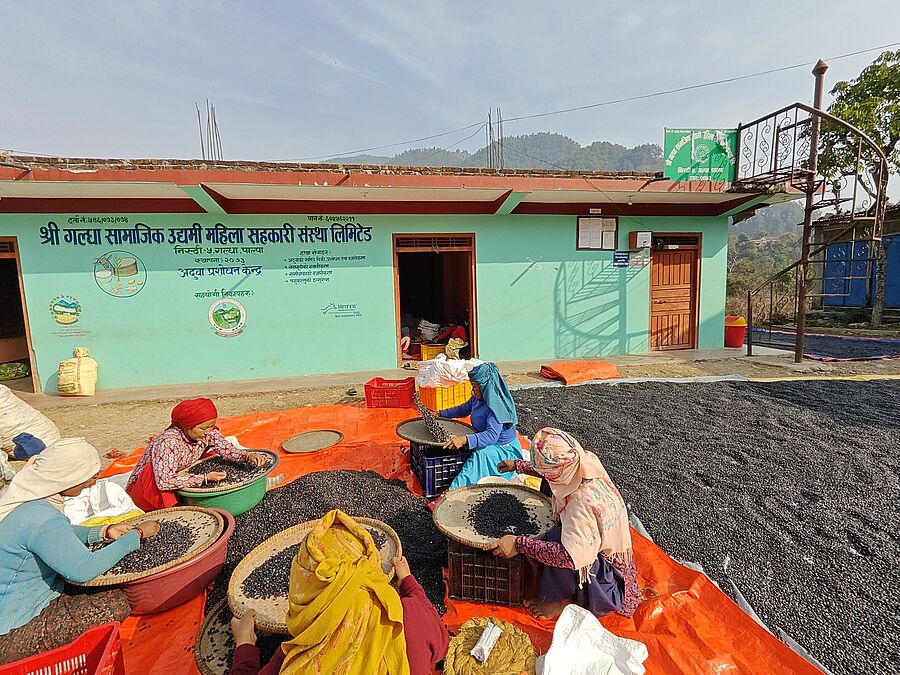
Smallholder farmers in Nepal’s mountain regions are battling the impacts of climate change and a lack of access to international markets. At the same time, German companies need to develop new, transparent and sustainable supply chains. A joint project between Midsona Deutschland GmbH, the tech company aQysta and GIZ as part of a develoPPP programme shows how both can go together – with regenerative agriculture, renewable energy and new export opportunities.
In Nepal’s mountain regions, many smallholder farmers are grappling with growing challenges. Climate change is causing unpredictable rainy seasons, soil fertility is decreasing due to monocultures and, in many places, access to irrigation is limited. At the same time, lucrative international markets remain closed off to farmers, for instance because they lack organic certifications.
Meanwhile, German company Midsona, a leader in the German organic food sector, is seeking alternative raw material sources in order to reduce dependency on non-transparent Chinese supply chains and decrease CO2 emissions.
This is precisely where a joint project comes in: Since 2025, Midsona has been working with aQysta, a company operating in Nepal, and the Deutsche Gesellschaft für Internationale Zusammenarbeit (GIZ) GmbH. In a develoPPP programme from the German Federal Ministry for Economic Cooperation and Development (BMZ), they aim to develop a transparent and sustainable value chain for organic products from Nepal.
With support from the project, German organic company Midsona can decarbonise its operations. Thanks to diversified supply chains, it can decrease dependency on Chinese suppliers and become more resistant to political, social and climate-related shocks.
Smallholder farmers in Nepal can better manage the impacts of climate change thanks to new cultivation methods, and benefit from higher incomes as they can offer their products on new export markets for organic products.
The project is seeing success: The first containers full of organic products have now been shipped from Nepal to Midsona in Germany. For Midsona, this means a new sustainable and resilient supply chain. A project that benefits everyone.
Published on