Companies face a multitude of questions when they embark on international projects, whether they seek a market entry strategy, a new business model or aim to expand. What is the right financing model? What financial support is available? Do they need a local partner? And how can a business model be scaled sustainably? During the initial consultation, AWE, the Agency for Business and Economic Development, helps companies structure their idea, explore suitable funding and financing options, and identify the next steps. In this interview, Ann-Kathrin Hentschel, the new contact for initial consultations, introduces herself and explains the most important factors in international projects.
Capturing new markets - but how?

© Filiz Yildiz/pexels
What exactly happens at an initial consultation? What questions come up most frequently?
Ann-Kathrin Hentschel: Lots of companies come to us with a specific idea – but not necessarily with a finalised project plan. That’s what the initial consultancy is there for. Together we look at what the company has planned, where it currently stands, and what next steps make sense.
For instance, a medium-sized company that wants to enter a new market might want to know what local partners it needs. Or a company might already have developed a technology or a business model and wants to see whether it can be used as the basis for a project in a developing country or emerging economy.
We often hear questions like: What financing model suits my project idea? Is financial support available? What conditions do I need to meet? Do I need a local partner? How can I make my idea into a viable project?
That’s why the consultation first focuses on structuring the project. Together we establish what is already clear, and what questions still need to be addressed. We ascertain what offers, instruments and contacts could be helpful for the next step.
Sometimes it becomes apparent that a company first needs to do some more preparatory work or hone its idea more. Realising that can also be very helpful.
What are the benefits for companies and when is the consultation suitable?
Hentschel: I think the major benefit is that they get an initial overview and some guidance. One indisputable benefit for companies is that we can draw not only on our own expertise, but also on a broad network of experts at the initial consultation stage.
International projects tend to involve a huge number of contacts, programmes and financing options. It’s not always easy for companies to see which offer is the best fit for their own approach.
The initial consultation is especially suited to companies aiming to enter a new market, plan an international project or find a local partner.
We help go through the various opportunities and identify the next steps to take. We can, for instance, put the company in touch with colleagues who have in-depth experience in the relevant region or sector. I believe that what sets AWE apart is the fact that we are extremely well connected, both here in Germany and abroad.
What information should companies bring to the initial consultation?
Hentschel: They don’t need a finalised business plan. But the more detailed the description of a company’s project, the better we can assess which opportunities might be suitable.
It is, for instance, helpful to consider:
- What exactly is planned?
- In which country or region does the company wish to engage?
- What is the business model or the specific idea?
Information about the company itself can also be important: turnover, workforce, equity capital and liquidity, sector, international experience, and any ongoing activities in the target country.
But, nobody needs to bring a finalised plan. Sometimes a consultation can start with a fairly general question, like, ‘We see this as an interesting market – but how do we go about it?’
What specific support do you offer? What are possible outcomes? What are the next steps?
Hentschel: That obviously depends a lot on the company and its focus.
One possible outcome could be that we introduce a company to a specific support scheme or financing instrument. In other cases we might put the company in touch with an organisation or network that offers special expertise in a specific market.
Let’s say a company has developed water or energy supply technology and would like to introduce this in a certain country. First we would consider together: How detailed is the project already? Is there local demand? Are there any potential partners? What instruments could be helpful for financing or implementation?
Introducing Ann-Kathrin Hentschel
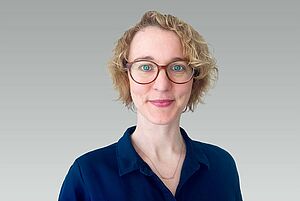
©Privat
After completing my degree, with a major in International Development and Management, I began my career in consultancy at the Deutsche Gesellschaft für Internationale Zusammenarbeit (GIZ) GmbH. The main focus of my work in Serbia was cooperation with the Serbian Chamber of Commerce, the German-Serbian Chamber of Commerce, businesses and TVET institutions with a view to introducing dual vocational training structures. Special emphasis was placed on good cooperation with German companies manufacturing in Serbia. They were crucially important for the successful introduction of dual vocational training and for giving it a new, enhanced image. Finally, my work centred on process advice and technical steering for TVET and employment projects, where I always had my eye on cooperation with the private sector.
On what international markets and in what sectors do you offer particular expertise and experience?
Hentschel: My job at the initial consultation stage is intended to be very broad in terms of sector and countries. That’s why I work closely with the various experts as part of a network.
When it comes to international engagement it’s important to look not only at the sector. A business model that works really well in one country can’t necessarily be transferred directly to another market. That’s why the local conditions, existing partnerships, regulatory issues and the economic situation on the ground always play a part.
What makes a business model in a developing country or emerging economy viable while also making sense from a development perspective?
Hentschel: I think a lot begins with a simple question: What concrete problem does the business model resolve, and for whom?
A project should not only look good on paper. It should be adapted to the actual conditions and demand on the ground. That means understanding local markets, involving partners and not simply trying to transfer a German business model one to one.
A model will be economically viable if it works in the long term and is not dependent on permanent support.
At the same time an economically successful project can also contribute to local development, by generating jobs, creating value, improving access to important services or disseminating sustainable technologies.
What risks tend to be underestimated or overestimated in international projects? What are the common misconceptions?
Hentschel: One common misconception is that the greatest challenge is to find the right market. Of course that is important. But it’s at least as important to consider how to implement the project on the ground.
The importance of local partnerships, regulatory frameworks, cultural differences and practical matters of logistics are sometimes underestimated.
Time is also an important factor. International projects often take longer than companies initially expect, especially if new partnerships need to be established or permits obtained.
On the other hand, risks are also sometimes overestimated. If a company does not yet know a market, many things initially appear uncertain or difficult to access.
So it’s important to be neither naive nor overly cautious. Companies that are well prepared, harness local expertise and identify reliable partners can significantly reduce many risks. And many companies don’t even know that support is available to help them tap into a market, be it in the form of the German Chamber of Commerce in the country in question, AWE or DEG. We establish contacts and help bring together public and private-sector engagement.
What types of projects have particularly good chances of obtaining financial support? What preconditions apply?
Hentschel: There is no generally valid answer, because different programmes have different objectives and different preconditions.
Essentially, approaches that make business sense and are realistically feasible, while also generating concrete benefits in the partner country are interesting.
This might involve local value creation, providing jobs, or transferring expertise and technology.
What common mistakes do companies make when they apply for financial support?
Hentschel: One common mistake is to focus on one specific support programme at a very early stage.
Sometimes the first question is: ‘What support can I get?’ I think it makes more sense to ask, ‘What exactly do we aim to achieve, and what do we need to achieve it?’. Only then should you see which instrument is a good fit.
Companies should also factor in enough time. Support and financing processes can be complex.
Sometimes it’s our job to tell a company that a project is not eligible for funding in its current state. Experience shows that financial support is only an asset, but it is not the factor that decides whether a project will succeed or not.
What attracted you personally to your work at AWE and to the link between business and development cooperation? What are you most looking forward to?
Hentschel: I think it’s very exciting that my work at the point where companies meet development cooperation is very practical.
It’s not just about the major strategic issues but also about helping companies take the next very concrete step – take an idea to the next level, better understand a new market, or find the right contact.
Most of all, I look forward to meeting with the companies. Every case is different. Every market presents its own set of questions.
Published on