Mercosur agreement. One step forward, two steps back
One step forward, two steps back
by Sina Hoffmann
At the beginning of the year, the time had finally come: after more than 25 years of negotiations, the EU and the four Mercosur states of Argentina, Brazil, Paraguay and Uruguay agreed on a joint free trade agreement. The aim is to facilitate the exchange of goods and services by reducing tariffs and trade barriers. Over 90 per cent of all tariffs are to be gradually eliminated. Most EU member states voted in favour and European Commission President Ursula von der Leyen signed the agreement in Paraguay.
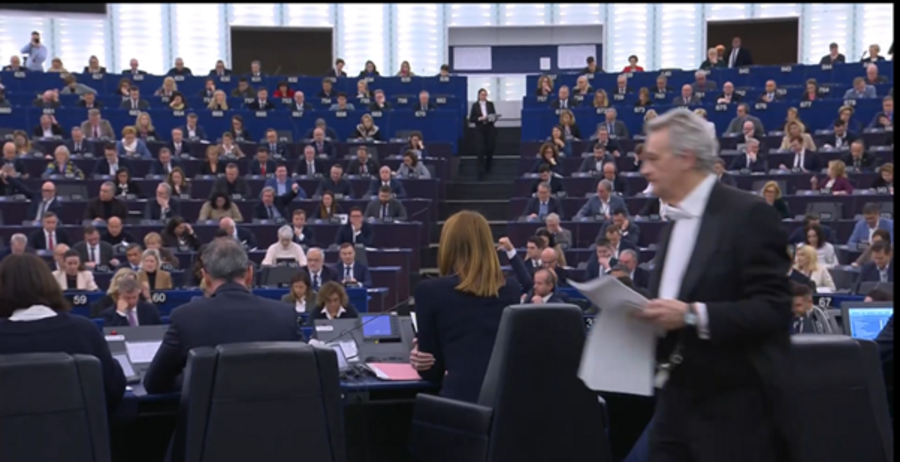
However, although it has just been signed, the deal is hanging in the balance again: the European Parliament has called for the agreement to be reviewed by the European Court of Justice. The result was close: 334 MPs voted in favour, 324 against and eleven abstained. What was particularly noteworthy was that the majority of conservatives, social democrats and liberals were against the review. The Greens and MPs from the far left and far right voted together in favour of it – breaking a taboo that the Greens usually criticise sharply in other parties. Opponents of the agreement find fault in its insufficient environmental, animal welfare and consumer protection standards. The divided structure of the agreement has also been criticised: the partnership agreement must be approved by all EU member states, while the section on trade requires only the approval of the EU Parliament.
The decision may now delay ratification by up to two years. Provisional application is being discussed as a possible solution – a very common approach that is already in practise for the EU-Canada Comprehensive Economic and Trade Agreement (CETA). If the European Court of Justice determines that there are legal deficiencies, the agreement would have to be renegotiated.
More than trade
From a geopolitical perspective, the postponement of the Mercosur agreement is a missed opportunity. Geopolitical developments leave no room for internal disputes and partisan power games. The EU is under increasing pressure from several sides, facing trade conflicts, wars and economic dependence on China and the US. The agreement would enable Europe to strengthen trade relations, diversify supply chains and thus secure the competitiveness of its own industry. New partnerships with regions such as the Mercosur states are essential in order to be able to act with economic and political sovereignty. A successful conclusion could also pave the way for further agreements, for example with Thailand or Australia.
Opportunities for SMEs
The creation of the world’s largest free trade area would also have economic benefits for both sides: according to the EU Commission, European companies could save up to four billion EUR per year in tariffs and increase the value of their annual exports by up to 39 per cent. Trade between the EU and the Mercosur states currently accounts for around 2.5 per cent of the EU’s foreign trade. Machinery, chemicals, pharmaceuticals, vehicles and automotive parts are among the most important export goods. The Mercosur states would also benefit from better market access and reduced trade barriers. According to the Commission, their exports to the EU – primarily beef, soy, sugar, coffee and other agricultural products – could increase by nine billion EUR. After China, the EU is the most important trading partner for the Mercosur countries.
The agreement opens up new opportunities for SMEs in particular. Up to now, small and medium-sized enterprises have suffered more from the complicated procedures and additional costs than large corporations, which have the necessary resources. The agreement would create transparency, simplify processing procedures and guarantee fair competitive conditions. According to the German Chamber of Commerce and Industry, one in three companies expects positive effects from the Mercosur agreement, with a quarter of companies planning new or expanded business activities in South America.
Resistance from agriculture and environmental groups
Despite this, the trade agreement has been a source of controversy in Europe for years. There is particular concern among European farmers: they fear that South American producers, with their lower environmental and animal welfare standards, will undermine their business. They warn of declining prices that could affect small and medium-sized farms in particular. To prevent this, the agreement provides for quotas and safeguard clauses for imported products such as beef, poultry and sugar. In addition, the strict EU standards apply to imported agricultural and food products, as with any trade agreement. Forecasts predict only minor consequences for agriculture. On the contrary, the agreement may open up new export markets for dairy products and processed foods.
The criticism from environmental and human rights organisations is harsher. They fear that the agreement will exacerbate existing inequalities between Europe and South America. For example, deforestation and land disputes could be fuelled in order to gain more areas for livestock farming, soy or sugar cane. The export of pesticides banned in the EU is also being criticised – as is the associated risk to local workers and the fact that the chemicals could return to Europe via imported products. Partners are committed to complying with international environmental and social standards and the Paris Agreement. However, organisations doubt that the checks agreed are sufficient and that violations will be sanctioned. Over 400 organisations on the two sides of the Atlantic reject the agreement. Several national and regional parliaments, for example in Austria, France, Poland and the Netherlands, have also positioned themselves against the agreement.
A strategic error
Although some of the concerns are certainly justified, the Mercosur agreement could create an urgently needed reliable framework for trade and investment. At the same time, the EU would signal that it is capable of international action. The blockade is currently having the opposite effect. The political turbulence does not inspire much confidence either internally or externally. As a result, Europe is losing influence and prestige in global trade, while China in particular continues to strengthen its position. At the same time, the Mercosur states are already negotiating similar agreements with other partners. European hesitation not only jeopardises the agreement itself, but also future trade initiatives. The real danger is that other players will end up securing markets that Europe could have opened up long ago.
Published on