Companies need to look beyond established economic areas
The water level of the Rhine River in Düsseldorf fell at times to zero or below, AI agents attacked one another, and the smoke from a major fire in Belgium drifted as far as Cologne: after the summer of 2026, the future seems more volatile than usual. For German SMEs, it is now more important than ever to prepare for a variety of future scenarios – and use strategic foresight, new partnerships and innovation to tap into future markets in Africa and Asia.
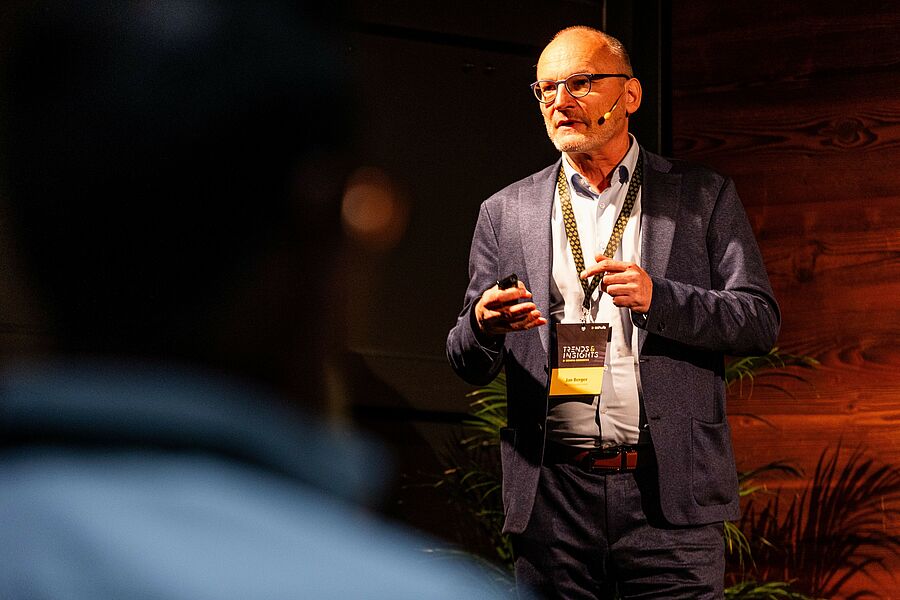
Guest article by Jan Berger
German companies are part of the European Economic Area – and are therefore dependent on the European Union’s ability to act effectively in the coming years. This European regulatory and economic framework can no longer be taken for granted. Looking at the next five to ten years, three scenarios are possible. These are not merely academic exercises: each of them would significantly alter the conditions under which German companies invest, manufacture and export.
Three scenarios for Europe
In the first, and most unfavourable scenario, the EU collapses, reverting back to individual states over the next five to ten years. The member states would then be preoccupied with their own affairs, and with securing alliances and peace among themselves. For German SMEs, this would destabilise the decades-long political and economic framework on which they built their business models.
The second scenario is stagnation. No fundamental changes take place, and the EU languishes in a sort of agony – an extremely unfortunate state of affairs, but this is our current direction if significant reforms are not introduced. A decline like this would be less spectacular than a collapse, but could gradually undermine Europe’s economic and political capacity to act over a period of years.
The third scenario would be the most favourable: the EU develops into a genuine global power. The clear internal focus would be on innovation and economic growth. It is not just my favourite scenario, but it is also in the interest of Europeans, and in the interest of German SMEs. But this scenario will not materialise on its own. It requires Europe to resolutely renew its economic strength, innovative ability and political capacity to act.
These scenarios are not a forecast. They describe very different paths of development that companies must be prepared for. It is therefore not a matter of companies trying to guess the most likely scenario, but rather of structuring their own organisations in a way that ensures their viability in a number of future situations.
The outside world is, and will remain, important for the success of German companies. This applies to each of the scenarios outlined. For the scenario in which Europe remains effective, Germany’s SMEs must also be capable of taking action. After all, the hidden champions and specialists in their fields based in the commercial areas between Rostock and Freiburg are the driving forces behind growth in Germany. If the German SME sector remains stable, Germany has a better chance of stabilising the entire EU.
Identifying growth regions, diversifying markets
The good news in this context is that globalisation is far from over, even if the signs today are different from those seen just a few years ago. In addition to the European and North American economic areas, other market centres are emerging with their own growth dynamics. In South and South-East Asia, for example, German companies are finding very interesting partners. India is experiencing extremely rapid growth, and Indonesia is often underestimated. Furthermore, countries such as Malaysia, Singapore, Viet Nam and Cambodia represent interesting future markets for German SMEs. The countries of North Africa are attractive growth markets due to their enormous potential for affordable, diversified green energy – particularly for German companies.
This means that German SMEs should take a broader view of their international positioning and not focus solely on individual sales markets. It is crucial to understand at an early stage what local needs exist and where there is potential for so-called frugal innovation. This refers to products that focus on essential functions: fewer features, lower costs, the same quality. This can ensure success for German companies in such markets.
More effective tech positioning
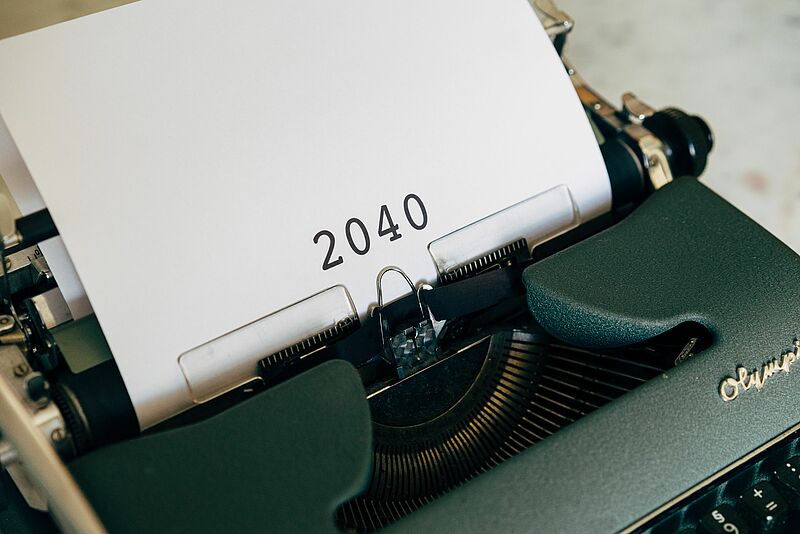
German SMEs possess a great deal of technological depth in industrial processes. This is a strength that will enable companies to excel even in a future where many processes are optimised using AI. Take this example: the way we eat today is based on three major innovations from between 1910 and 1920 – the Haber-Bosch process for fertilisers, the tractor and the electric refrigerator. Since then, we have done nothing but optimise these three things.
But what if we were to combine the in-depth tech expertise of German companies with the possibilities offered by artificial intelligence? The crucial question is: are we simply using AI time and again to optimise the past? Or would it not be better to develop new production processes that enable us, for example, to produce high-quality proteins – which are cheaper, healthier and more sustainable – without resorting to factory farming, soil compaction and over-fertilisation; in other words, to create markets that can sustain us for several generations to come?
Three core skills for the future
To tackle these steps, SMEs need, first and foremost, an even greater capacity for strategic – and also geopolitical – foresight. The days when one could quickly determine, based on the growth curve of the Asian middle class, how many products would be sold there in 20 years’ time are over. Today, management teams in SMEs must be prepared to consider several – sometimes extremely different – scenarios simultaneously. This allows them to respond swiftly and flexibly to the scenario that actually unfolds.
Secondly, SMEs need even greater expertise in technology and data: what can AI actually do for my business, and what can other technologies – such as biotechnology, materials science, propulsion, photonics or robotics – really achieve? And in which areas am I making my business model too dependent on suppliers who cost my company more than they bring in?
Thirdly – and this is the most important point – SMEs in the Alb or Saxon Switzerland regions also need radical innovation. They should certainly work to optimise their existing products, as that is where the margins are generated. But companies must also set aside ten per cent of their capacity not just to optimise the old tractor, but to consider how it might be replaced by something better, cheaper and more sustainable.
Partnerships as a driver of innovation
The necessary perspectives rarely emerge within closed systems. Partnerships with companies, research institutions and public sector players outside established economic areas can therefore be more than just a way to tap into new markets. They can become a driving force for innovation.
The partners contribute their perspectives, needs and experiences. This helps to break away from the beaten path and discover profitable new ways forward. Regardless of which scenario ultimately comes to pass.
Published on