The Import Promotion Desk (IPD) is a key point of contact for companies from Germany and Europe looking to explore new procurement opportunities and markets. Every day, the project teams are in contact with buyers. Face-to-face meetings take place primarily at international trade fairs, during procurement trips and at industry events. This gives the IPD specialists an excellent overview of importers’ requirements. They know what conditions must be met for a successful, long-term business relationship. They use this knowledge to facilitate targeted matchmaking. Thomas Derstadt, Head of Sourcing + Markets at IPD and responsible, among other things, for the Natural Ingredients sector, understands the hard and soft factors involved in successful business relationships.
Trust as the key to success
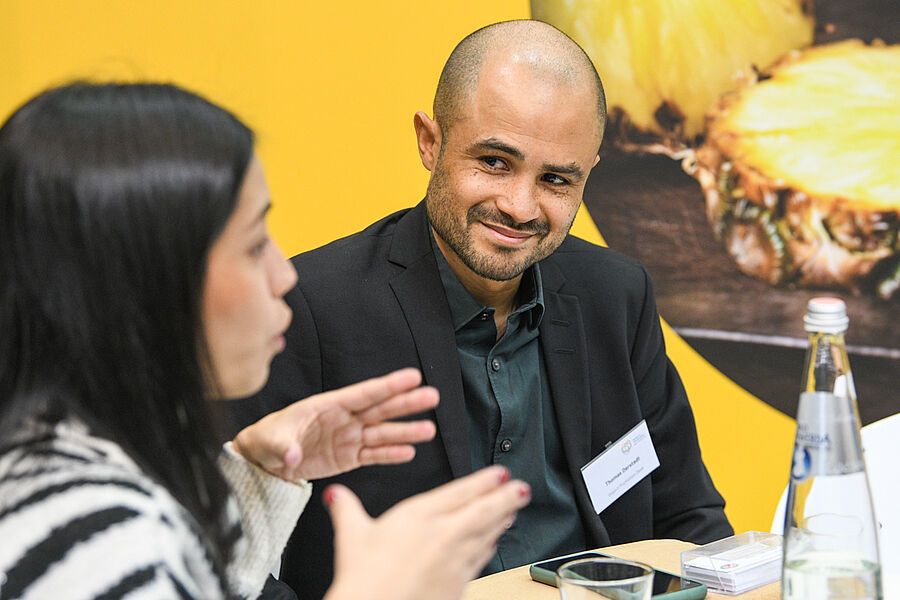
What do European importers look for when first making contact with a producer? What information should be available?
Thomas Derstadt: When companies get in touch with the IPD team or visit the IPD stand at a trade fair, buyers first check whether the desired products are available to the required specifications. In the natural ingredients sector, this refers not only to technical requirements but also to certificates.
During face-to-face discussions, buyers then assess how professionally the producers are organised. Can they provide the requested information? Do they have professional marketing materials? Do they come across as reliable? Trust is crucial right from the start. I always tell companies that products meeting the requested specifications open the door, but trust keeps it open.
Meeting these requirements creates the foundation. That is why we check in advance whether the companies in the IPD programme meet the minimum standards for the European market. We provide them with the relevant market information and support them throughout the process. And we advise them on their offering, particularly on which product details can win over the market. This also involves developing a market entry strategy and creating credible marketing materials.
What is crucial during a procurement trip to ensure that an initial meeting leads to a concrete business opportunity?
Thomas Derstadt: A procurement trip is all about personal contacts and gaining insights into local production. However, it is just as important to convey a sense of the country – of the people and the products.
Procurement trips are a holistic experience. That is why the itinerary is crucial. Naturally, the businesses to be visited must be carefully selected. This should be complemented by meetings with trade organisations and possibly by additional events such as trade fairs. This gives companies a good picture of the potential procurement market and, consequently, of the environment in which their future business partner operates.
Following a trip or a trade fair, it’s important to follow up on contacts consistently. IPD supports companies in this regard through the IPD programme. After all, following a trip or a trade fair, it can still take some time before the first trial delivery is requested. So the key here is to stay on the ball in terms of strategy.
What needs to be clarified after successfully initiating business to ensure a contract is concluded?
Thomas Derstadt: For the contract, the ‘hard’ factors must, of course, be right: the product specifications and the contractual terms. Where necessary, IPD provides support with communication and has discussed possible options with the manufacturer in advance so it can go into negotiations well prepared.
But trust forms the basis of the contract and the collaboration. Companies in the IPD programme are given the benefit of the doubt by many buyers because we have visited and carefully vetted the manufacturers beforehand. This reduces the risk for the buyers. For a long-term partnership, both business partners must earn each other’s trust through high quality, transparent communication and by keeping their promises.
You can find out more about IPD’s services for importers here
Published on