Cocoa with an impact: what companies can learn from Bahlsen
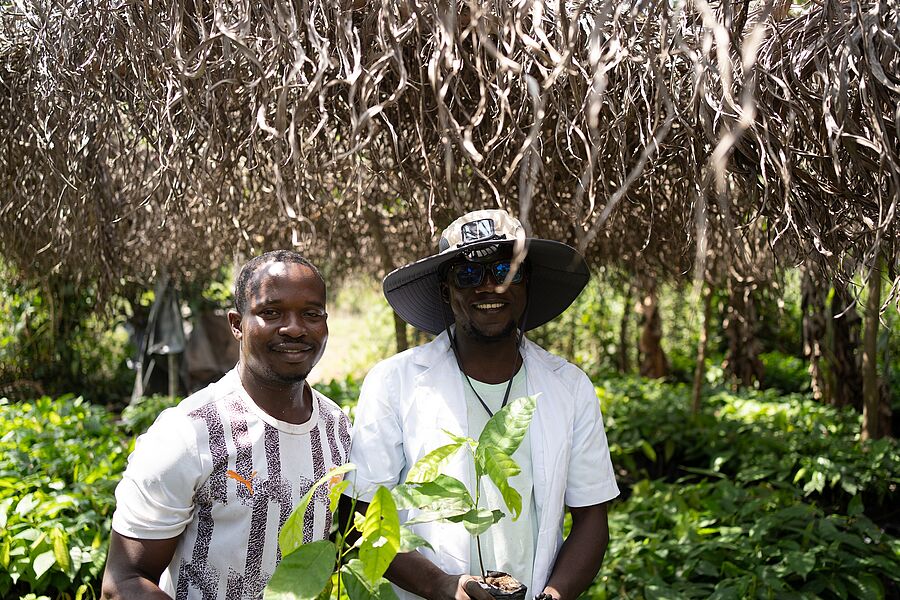
CABOZ – a company specialising in sustainable supply chains – and smallholder farmers to make cocoa cultivation sustainable for the future. Their first project focused on sustainable cultivation methods, income-generating measures and financial education. This has improved the economic prospects of around 1,200 farming households, increased their resilience to climate risks and created new development opportunities locally.
It is particularly noteworthy that this commitment extends beyond the company’s own supply chain: For Bahlsen, the priority is the shared goal of advancing sustainable solutions for one of the world’s most important cocoa-growing regions. However, the firm does not source cocoa directly from the project.
Experience shows that technical solutions alone are not enough. Climate-resilient cultivation methods, such as agroforestry systems, have an impact only when they bring direct economic benefits to people. That is why the initiative specifically combines ecological planting with practical financial education and supporting local savings and credit groups. This creates reliable, additional sources of income and strengthens households’ independence in the long term.
Following the success of the first develoPPP project, a second one has been under way since the end of 2025. It is funded by DEG Impulse with EUR 500,000 provided by the German Federal Ministry for Economic Cooperation and Development (BMZ). The new project goes one step further. In addition to the further development of agroforestry, the focus is now shifting to food security, targeted empowerment of women, financial inclusion and the expansion of education and health infrastructure.
What lessons has Bahlsen learned from this collaboration? Kathinka Nagel, Sustainability Manager at Bahlsen, sums it up:
‘My most important tip for working with development cooperation organisations is to focus on shared goals and the expertise of local partners. This leads to solutions that both improve people’s living conditions and create a sustainable impact for businesses.’
Published on