

What’s the best way to get started? The SME Compass can help!
Whether you’re a supplier, retailer, or manufacturing company, global supply and value chains are part of everyday life for German SMEs and mid-sized businesses as well. But how can you be sure that raw materials were extracted under decent working conditions, that living wages are paid, and that occupational safety standards are upheld - especially in deeper parts of the supply chain?
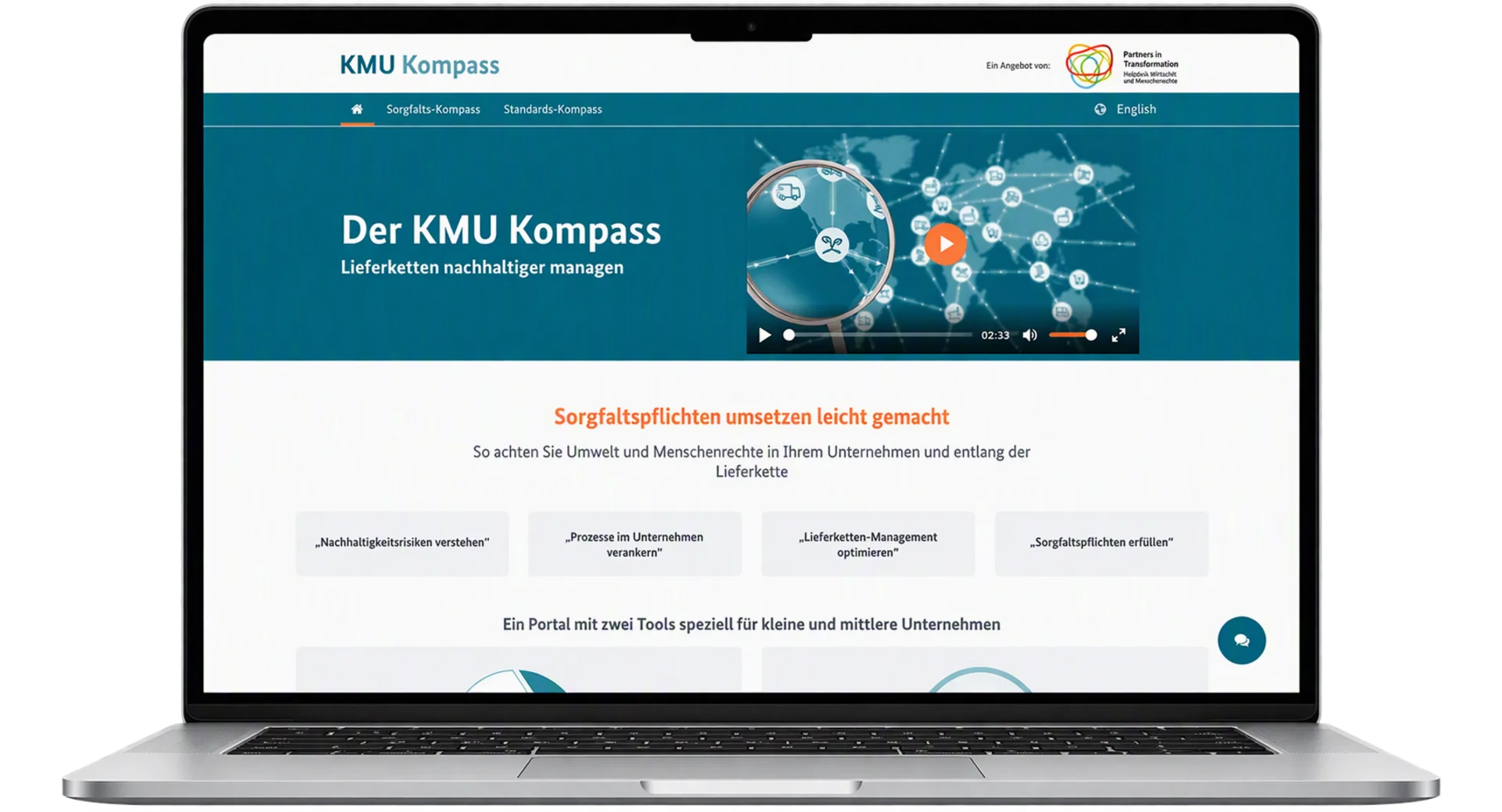
The SME Compass provides practical guidance to help companies implement human rights and environmental due diligence. The Due Diligence Compass enables you to get started with the due diligence process, while the Standards Compass helps you systematically assess sustainability standards and certifications. This allows you to make informed decisions and implement concrete measures along your supply chain.
Go directly to the SME Compass
The SME Compass supports companies in establishing a robust management system to help make their supply chains more environmentally and socially responsible. The free information portal offers practical help, specific instructions and tips, especially for small and medium-sized enterprises.
Go to SME CompassStep by Step through the due diligence process: Your entry point to sustainable supply chain management
What is the best way to get started? And how do I proceed from there? The "Due Diligence Compass" is part of the SME Compass. It guides you step by step toward more sustainable and resilient supply chains. . The information portal is aimed specifically at small and medium-seized enterprises (SMEs).
The Due Diligence Compass guides through the following steps:
- Develop a strategy - and set the direction.
- Analyse risks - and set priorities
- Take action - and take responsibility
- Measure and report - and support stakeholders
- Manage complaints - and improve processes
The content of the SME Compass is based on the UN Guiding Principles on Business and Human Rights and the OECD Guidelines for Multinational Enterprises.
Due Diligence CompassStandards Compass: Guidance for Selecting Sustainability Standards
How can companies navigate the complex world of sustainability standards? And which ones are relevant for your business? The Standards Compass supports you in finding your way through the wide range of sustainability standards and certifications.
As part of the SME Compass, it helps answer the key question: How can sustainability standards, certifications, and membership initiatives support companies in meeting their human rights and environmental due diligence obligations?
The Standards Compass provides guidance on:
- selecting suitable sustainability standards and initiatives
- understanding the strengths and limitations of standards
- comparing different standards
- clarifying which requirements companies need to implement on their own