A sustainable supply chain is now central to a company’s success. If it is to meet the requirements of all partners, it must be sustainable, environmentally friendly and fair to all involved. Companies need to check where their products come from, how they are manufactured and whether human rights are being violated in the process. Although that might sound abstract at first, it affects the day-to-day operations of many companies. Small and medium-sized enterprises (SMEs) in particular are often faced with the question: ‘How do we get started?’
So they are not left to address this task on their own, the Chambers of Industry and Commerce (IHKs) for Düsseldorf and the Middle Lower Rhine region have set up the Sustainable Supply Chain Management business network. Together with the Agency for Business and Economic Development (AWE), they support companies in North Rhine-Westphalia in complying with the requirements of German and international legislation.
The need to make supply chains more resilient is not an end in itself, but part of our core business.

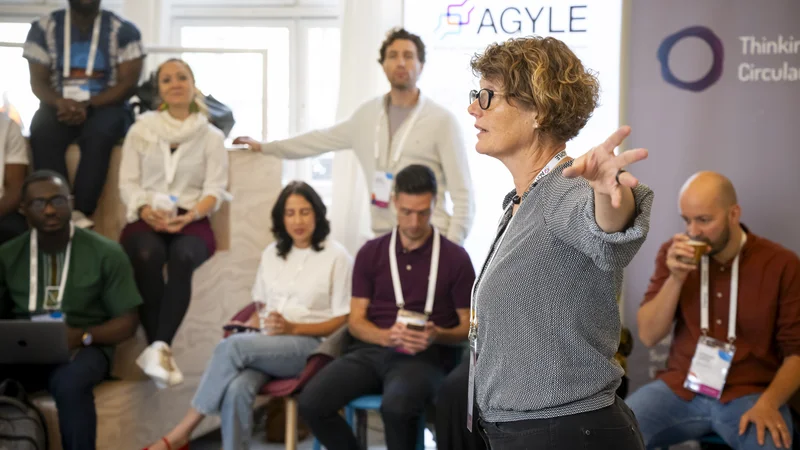
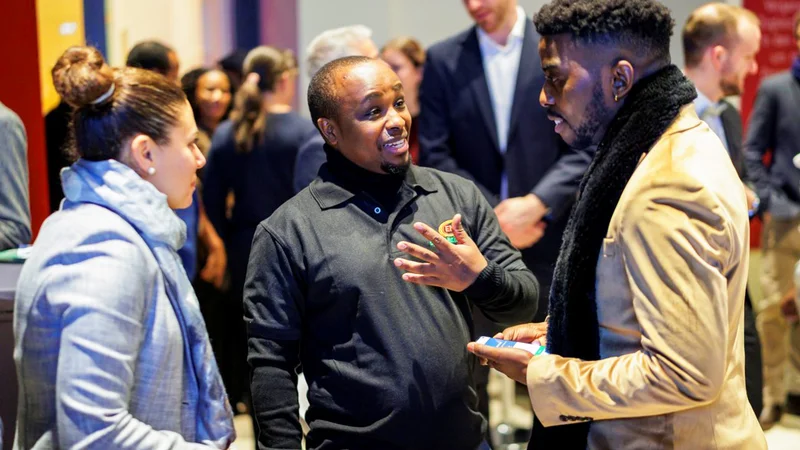
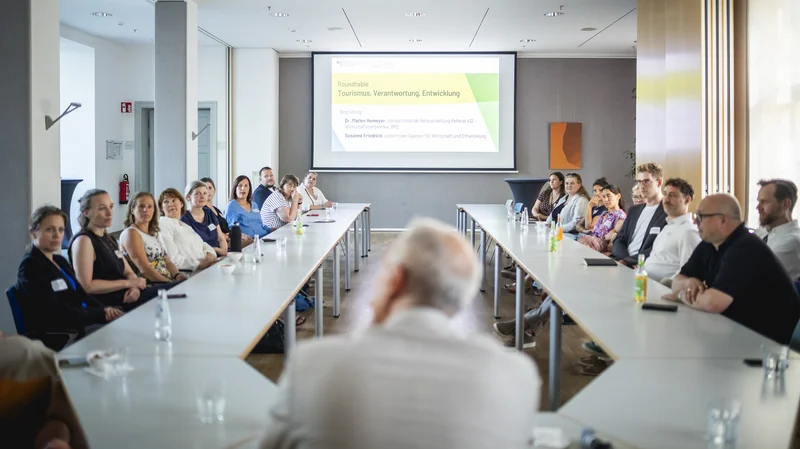
Regular network meetings are a key feature of the network. Here, experts – often from the field of development cooperation, but also experienced company representatives – share insights into their work. They show how companies can incorporate sustainability into the supply chain and put simple steps in place at the outset. These are often everyday issues: How do I approach my supplier? What data do I really need? How do I document risks without it being a considerable burden? The focus is on the practical benefits for companies, namely increased transparency, reduced risk, stable partnerships and an enhanced reputation with customers.
As well as offering successful approaches, the network also identifies stumbling blocks. Case studies, for example, enable participants to learn how companies deal with unexpected risks, and how regular communication with suppliers saves time and money in the long term. The meetings are an opportunity for them to ask questions, engage in discussion and share ideas directly with each other – a key benefit for many companies.
If you would like to become part of the Sustainable Supply Chain Management business network, please feel free to contact us, including via our contact form.
To the contact formFrequently asked questions
What exactly does the Sustainable Supply Chain Management business network offer in the way of support?
The Chambers of Commerce and Industry for Düsseldorf and the Middle Lower Rhine region and AWE pool specialist knowledge and real-world experience. The network offers:
- regular meetings with experts
- case studies from various industries
- concrete recommendations for everyday action
- dialogue with other companies facing similar issues
Participants benefit in particular from the experiences of other businesses – what works in theory often needs to be adapted in practice.
Who exactly is the network aimed at?
The events are primarily aimed at companies subject to sustainability requirements and medium-sized suppliers from North Rhine-Westphalia. However, smaller enterprises can also benefit if their customers pass on sustainability requirements. The network is open to anyone wishing to make their supply chain sustainable, regardless of size or sector.
What topics are most frequently discussed by the Sustainable Supply Chain Management network?
The meetings deal with key substantive and technical issues that are important for sustainable supply chain management. These include:
- Legal requirements and developments – such as the German Supply Chain Act (LkSG), the Corporate Sustainability Reporting Directive (CSRD) and the Corporate Sustainability Due Diligence Directive (CSDDD). The Chambers of Industry and Commerce provide regular information on these in the form of updates and presentations.
- Practical examples and industry insights – companies report on the lessons learned from managing their own supply chains, the challenges they face and best practices.
- Methods, procedures and operational tasks – including risk analyses, implementing remedial and preventive measures and managing complex value chains.
What are the long-term benefits for my company?
In the long term, participation will strengthen the strategic development of your company’s own supply chain management. Besides being able to deal with growing sustainability requirements more confidently, companies can improve their internal processes through regular input and develop more robust and transparent supply chains. This creates resilient structures that will benefit them in the long term.
How much does it cost to take part and how much work is involved for a company?
Participation in the events organised by the Sustainable Supply Chain Management network is free of charge. The network has been deliberately designed to be flexible. The Chambers of Industry and Commerce for Düsseldorf and the Middle Lower Rhine region organise network meetings several times a year, often once a quarter, which are supplemented by an ongoing digital platform for dialogue. As a result, companies are able to decide for themselves the extent of their participation.
To explore content in greater depth, the Chamber of Industry and Commerce for the Middle Lower Rhine region offers the Online Certificate Course: Sustainable Supply Chain Management.
What development cooperation services are involved?
The Sustainable Supply Chain Management network draws, among other things, on the sustainability expertise of the following institutions:
- Helpdesk on Business and Human Rights: a free support service provided by the German Government that advises companies of all sizes on the implementation of human rights due diligence processes.
- German Sustainability Code: a cross-industry transparency standard for reporting corporate sustainability performance and which offers a free digital tool that facilitates the creation of sustainability reports.
- Sustainable Agricultural Supply Chains Initiative (SASI): an initiative implemented by GIZ on behalf of BMZ that makes global agricultural supply chains more economically, socially and environmentally sustainable. It brings together partners from the worlds of politics, business and civil society to promote fair incomes, zero deforestation and working standards.