Increasingly urban and better educated
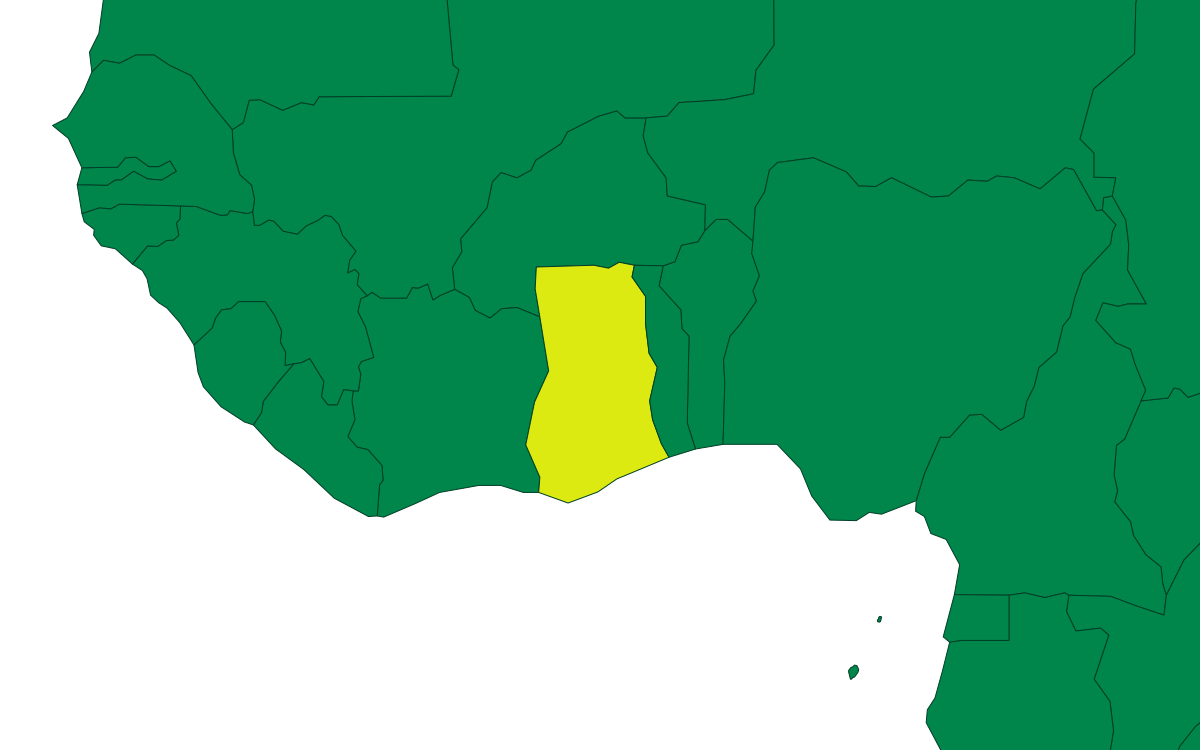
Ghana is an emerging democracy in West Africa with a population of around 35 million. Almost 60 per cent of the population lives in cities. Recent decades have seen ever increasing rates of urbanisation. This is placing a strain on cities, resulting in poor road conditions and power cuts, for example.
With a median age of 21, Ghana is a young country. As the Ghanaian Government has increased investment in education since the 1990s and more and more universities – especially private ones – have been founded, there are many well-trained graduates and skilled workers. The official language in Ghana is English, which gives it a competitive edge over its francophone neighbours in West Africa.
The topography in Ghana is varied, featuring a mix of coastline, savannah and mountains. Lake Volta offers potential for hydropower, while the sun offers potential for photovoltaic energy. Ghana has abundant deposits of gold and bauxite, an ore from which aluminium is extracted.
Working towards a 24-hour economy?
Ghana’s future-oriented industries reflect the ‘Reset Agenda’ of President John Mahama and his social democratic National Democratic Congress (NDC) party. With a package worth four billion US dollars, the NDC aims to make the economy more sustainable and more digital. By 2030, the value of Ghana’s digital economy could increase from one to five billion US dollars. Opportunities in this area are provided by financial technologies, artificial intelligence (AI) and IT outsourcing. Ghana is also part of the European Union’s (EU) Global Gateway initiative, which will invest around 300 billion euros in sustainable projects by 2027, for example in safe bauxite mining.
The initiative also aims to promote renewable energies, vaccine manufacture and fair jobs in agriculture. John Mahama’s long-term goal is to make Ghana a 24-hour economy in which the country is productive around the clock.
Continued dependence despite a growing economy
With a gross domestic product (GDP) of 114,7 billion US dollars in 2025, Ghana is the tenth largest economy in Africa and therefore a mid-ranking economy globally. Economic output continues to grow – for example by around six per cent in 2025 – which is higher than average for sub-Saharan Africa (3.5 per cent).
Agriculture, mining and oil production are the cornerstones of the economy. Yet Ghana remains heavily dependent on exports of oil, gold and cocoa. The government is also struggling to create new jobs, despite economic growth. Between 80 and 90 per cent of the workforce is still employed in the informal sector, i.e. in jobs that are not recorded or regulated by the state. The official unemployment rate is 3.6 per cent. Inflation fell in 2025, but remained in double digits.
Did you know that…
- at 38.3 million, there are more mobile connections in Ghana than there are inhabitants?
- Lake Volta is one of largest reservoirs in the world, covering an area of almost 8,500 square metres?
- the number of internet users has more than doubled since 2017, from 11 to 24 million people? (70 per cent of the population)
An anchor of stability in the region
With a stable democracy and free elections, Ghana is seen as an anchor of stability in the region. The government of President John Mahama is regarded as being very open to foreign investors. The Freedom House index ranks Ghana as ‘Free’, with a score of 80 out of 100 points. In Transparency International’s Corruption Perceptions Index (CPI), Ghana is ranked 80th, a mid-ranking position. Social inequality and discrimination against LGBT+ groups are also problematic in Ghana.
Ratification of an Economic Partnership Agreement (EPA) between the Economic Community of West African States (ECOWAS) and the EU is currently subject to delay. Ghana has therefore entered into an interim bilateral agreement with the EU. This agreement grants Ghanaian exporters duty-free and quota-free access to the EU market; in return, Ghana is required to remove duties for 80 per cent of its imports from the EU by 2029.
Wide range of opportunities and funding options
Germany and Ghana have a long-standing development partnership that dates back to 1975. Many institutes and foundations play an active role in this context. Companies value political stability as a basis for investment. Google, for example, opened its AI Community Centre in Accra in 2025. A number of German companies, including DHL, Krones and Liebherr, also operate in the country.
Funding and advisory instruments help to ensure that companies and institutions get off to a good start in Ghana. These include develoPPP, the Import Promotion Desk, the Impact Connect loan programme and the promotion of chambers and associations by sequa GmbH. The Agency for Business and Economic Development (AWE) is available as an initial point of contact and provides support for sustainable projects. Investment potential is particularly great in the following sectors:
- Mining
- Renewable energies, especially solar energy
- Health care and the pharmaceutical industry
- Information and communications technology
- Agriculture
- Mechanical engineering