Award-winning idea
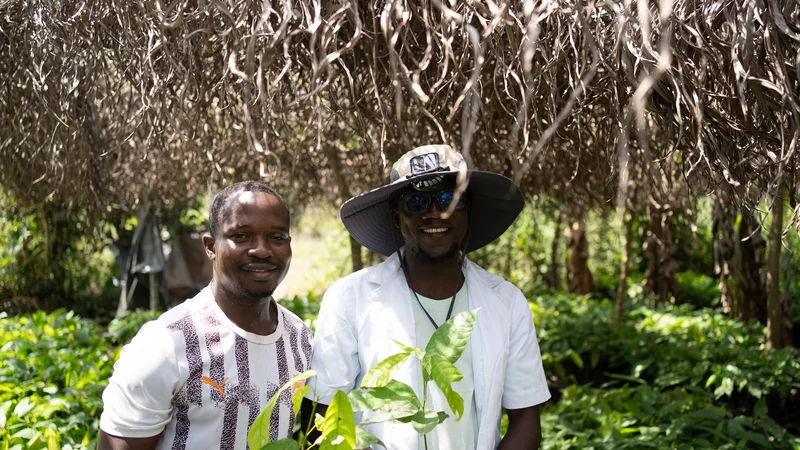
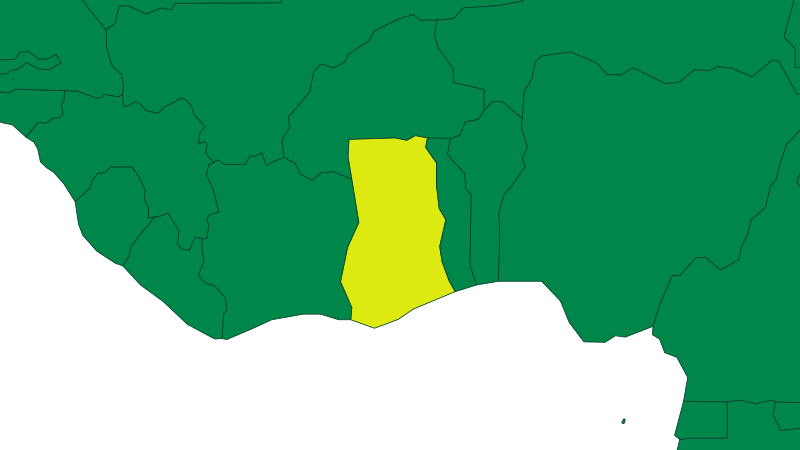
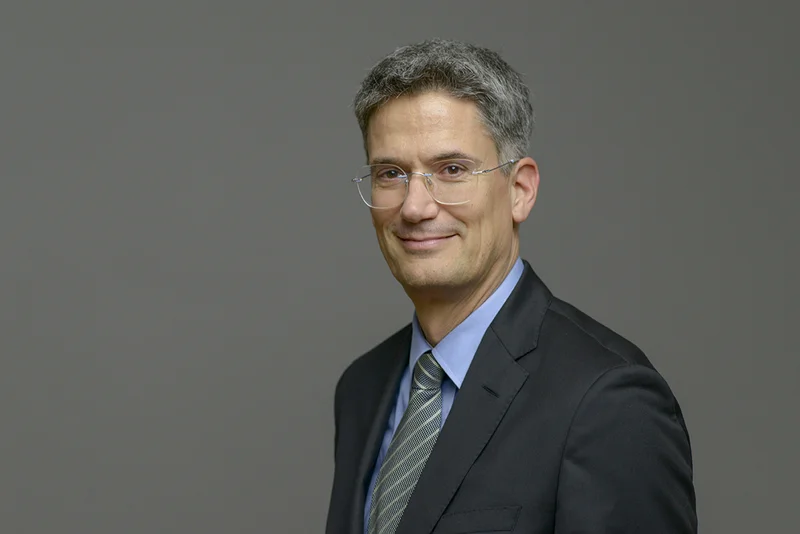
Dr Wolfram Schmidt from the Bundesanstalt für Materialforschung und -prüfung (BAM) has been researching sustainable building materials since 2009. Together with colleagues from Ghana and Nigeria, he developed a pyrolysis system at Koforidua Technical University (KTU) that uses biomass to produce materials for cement and concrete.
The approach builds on experience gained from the construction of a model home between 2016 and 2018 using cassava husk ash as a binding agent to produce concrete. The approach earned Schmidt and his partners the German-African Innovation Incentive Award in 2018. Current research focuses on further developing this technology so that it can be used throughout Africa, directly within village communities as part of local construction projects.
Low-carbon alternative urgently needed
Cement production accounts for around 8% of global CO₂ emissions, most of which result from the chemical reaction involved in burning limestone rather than energy consumption. Africa’s urban population is also growing rapidly, with OECD estimates predicting a doubling in size from 700 million to 1.4 billion people by 2050.
This means that demand for housing – and therefore for concrete – is set to skyrocket. If the industry continues to operate at current levels, this will present serious climate-related consequences. A more emission-friendly alternative is therefore urgently needed.
Easy to replicate, scalable, cost-effective
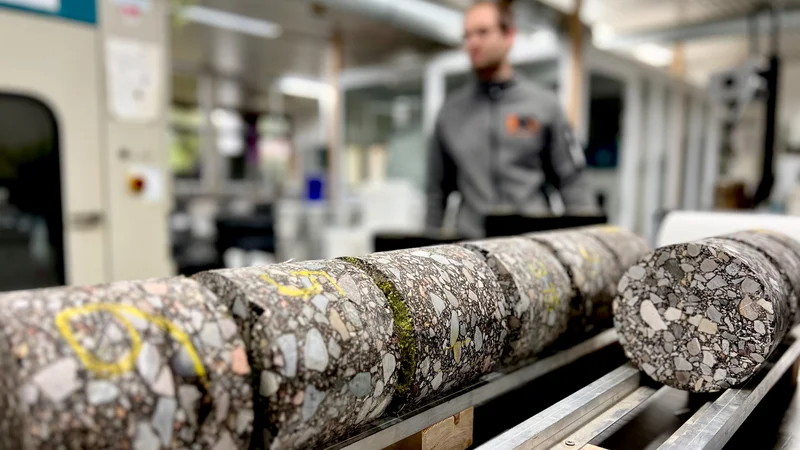
The idea of using natural materials in construction has been around for a long time. The benefits of using natural materials in construction were recognised as far back as Roman times, with volcanic ash used to produce durable mortar. Wolfram Schmidt and his team of colleagues at KTU used this concept of sustainability as a hook to develop a compact, cost-effective pyrolysis unit that is easy to replicate and is based on scalable technology. The unit carbonises food waste in the absence of oxygen, thereby avoiding the release of large volumes of CO₂ into the atmosphere.
This low-carbon concrete production process works as follows
- The biomass is heated in water before pyrolysis, releasing starches and other polysaccharides. These extracted elements improve the workability of concrete mixes without extra water, increasing the final strength.
- Pyrolysis process: The biomass is then carbonised in the system in the absence of oxygen, minimising the volume of emissions. The gases and oils produced during the process can be reused, for example as fuel or as chemicals for manufacturing asphalt.
- Waste as a resource: The resulting bio-char can be mixed into cement and concrete or used as fertiliser.
- Use of the ash: In a subsequent process, coal is burned in a furnace to produce ash that has cement-like properties and can be used to replace some of the cement in concrete. Any energy produced in this step can be used to supply kilns that fire bricks.
This creates a closed-loop system that reduces emissions, recycles waste and recovers energy.
Sharing knowledge and putting theory into practice
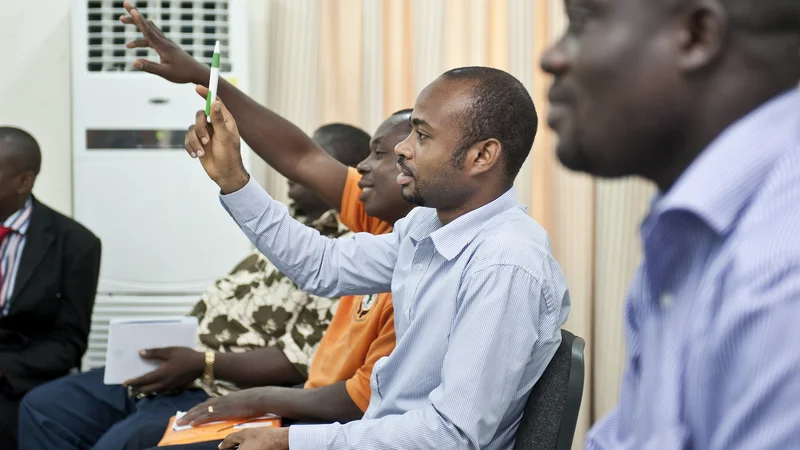
From the very start, the project set out to be sustainable in a number of ways. GIZ organised training for 100 local students, who acquired specialised knowledge of producing low-carbon cement and applied this knowledge in practical experiments. Some of them aim to investigate which material is best suited to producing efficient active carbon.
BAM and its partners researched the materials required for the entire production process, with a view to passing on this knowledge to local companies at a later date. The project partners successfully completed the facility in September 2023.
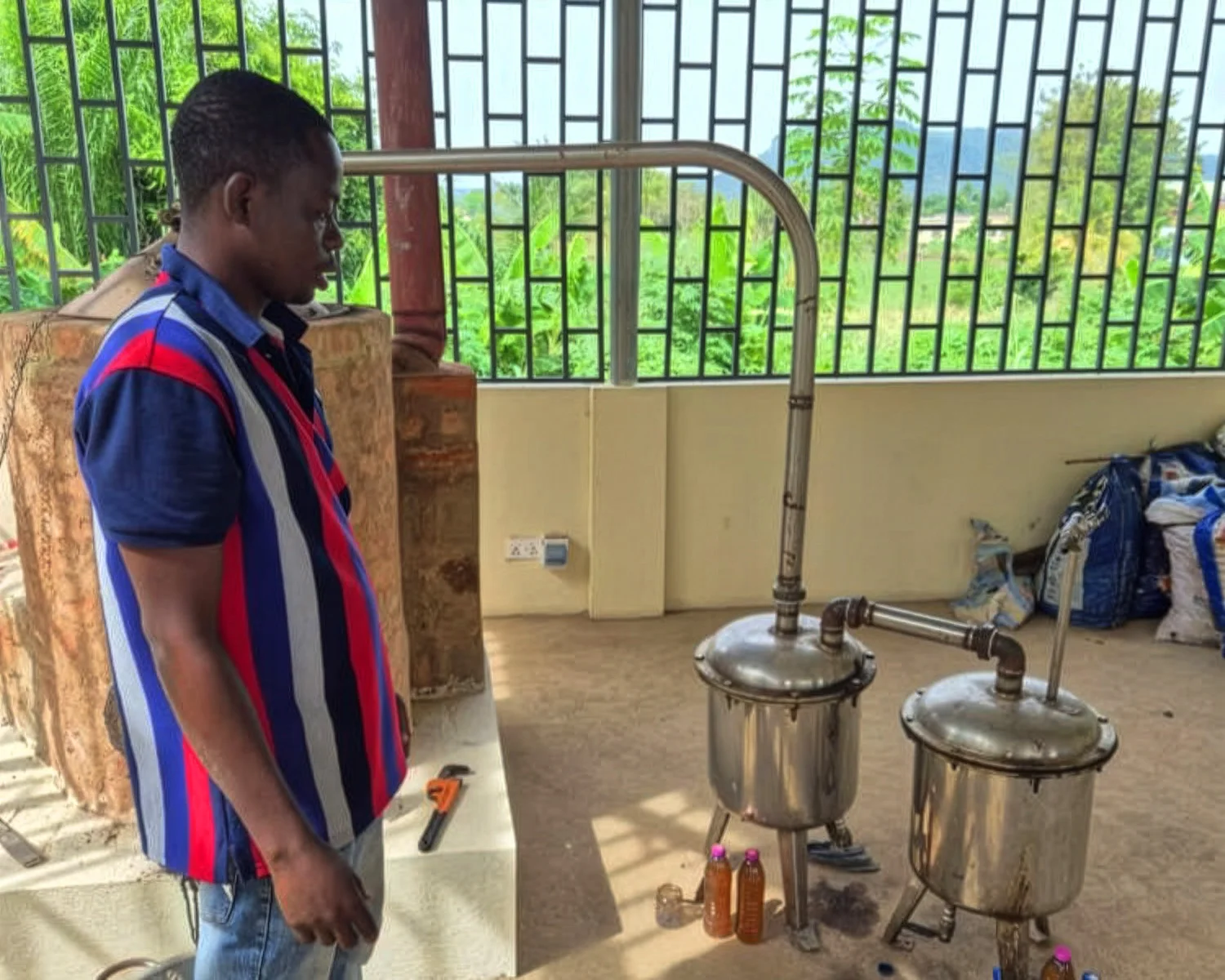
- The pyrolysis system in Ghana has been fully operational since September 2023. Two tonnes of organic waste have already been processed into bio-char since then.
- The recovered ash could replace up to 25% of cement in concrete. The process does not produce any additional CO₂ and also generates useful by-products such as thermal energy.
- Initial tests show that the method is practical, cost-effective and scalable at a local level.
- The pyrolysis technology developed in Africa provides valuable insights for the German and European construction industries, which urgently need to reduce CO₂ emissions in the cement sector.
- Cooperation with African partners strengthens economic ties, builds trust in German technologies and positions Germany as a pioneer in sustainable construction worldwide.
From a research project to a market-ready solution
‘African problems require African solutions,’ says Wolfram Schmidt. The use of agricultural by-products has demonstrated how waste can be turned into a valuable resource. Close collaboration between the research sector and industry has meant that the pyrolysis system has been developed not only as a research project but also as a marketable, practical solution. The project managers are already navigating the future, with Schmidt at the helm: ‘In an ideal world, this system would be mounted on a pick-up truck, so that it could produce and deliver at the same time.’
Federal Institute for Materials Research and Testing (BAM)
BAM’s key task was researching, planning and developing the relevant materials.
Read more
Koforidua Technical University (KTU)
KTU played a leading role in researching, planning and developing the relevant materials, and provided the research and production site.
Read more
Deutsche Gesellschaft für Internationale Zusammenarbeit (GIZ)
GIZ took charge of organising and delivering training.
Read more
United Nations Environment Programme (UNEP), Volkswagen Foundation and BMFTR projects
These actors provided support for further developing and scaling up activities for the African market.
Read more
Heidelberg Materials
Heidelberg Materials provided industrial expertise and carried out practical tests to assess the feasibility of applying the technology to cement production.
Read more
Arup Nigeria
Arup Nigeria provided engineering and design expertise and liaised with construction companies throughout the region.
Read more
Umdasch Group Ventures GmbH
Umdasch Group Ventures provided support in the form of funding and technical components.
Read more
MC Bauchemie
MC Bauchemie’s contribution included laboratory facilities and planning expertise.
Read more
Agency for Business and Economic Development (AWE)
AWE provided financial support for developing the pyrolysis system.
Read more