
Market economy fuels regional boom
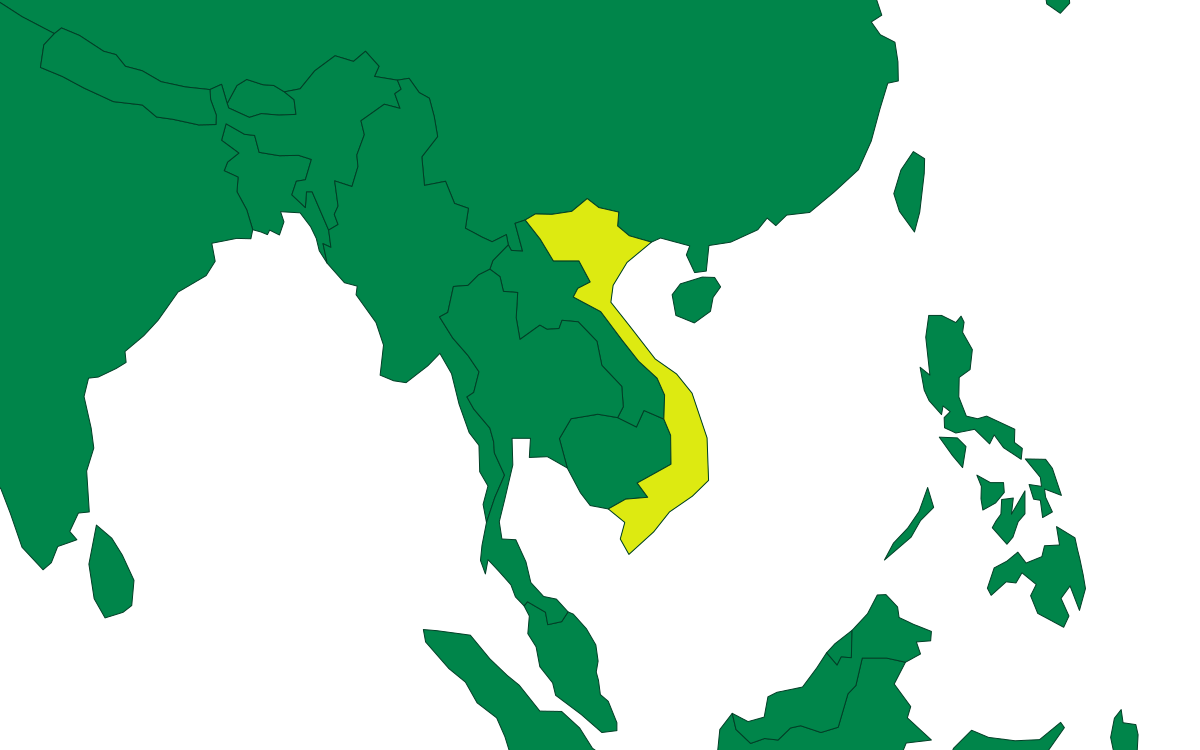
Back in the 1980s, Vietnam was one of the poorest countries in the world. As it transitioned from a planned to a market economy and opened up to foreign companies under the Doi Moi reform programme, the country began its ascent to a dynamic, middle-income emerging economy. Over the past two decades, Vietnam has cut its poverty rate from 30 per cent to less than two per cent.
With around 100 million inhabitants, Vietnam is the sixteenth largest country in the world by population and a major economic player in Southeast Asia. Much like Japan and China, Vietnamese society places great emphasis on education. A high literacy rate (96 per cent) and a relatively young population (median age of 32.9) provide a solid foundation for further advancement.
Focus on renewable energies
Since the mid-2010s, Vietnam has focused specifically on future-oriented sectors. At the heart of these efforts is the Power Development Plan 8, which sets the goal of climate neutrality by 2050. To achieve this, Vietnam is building on partnerships such as the Just Energy Transition Partnership (JETP). The country is currently one of the top 15 producers of solar energy worldwide.
Together with the Deutsche Gesellschaft für Internationale Zusammenarbeit (GIZ) GmbH, Vietnam is increasingly prioritising digitalisation and the circular economy. With waste volumes growing rapidly, there is still work to be done in this area. Key sectors, such as the production of textiles and food, are to be automated in an effort to cut carbon emissions.
Strong economic growth
Virtually no other Asian country is currently as dynamic as Vietnam in terms of economic development: with growth of seven per cent in 2024, it is the best-performing economy in Southeast Asia and in the top 20 globally. With a gross domestic product (GDP) of 476.4 billion US dollars, Vietnam is an upper middle-ranking country (top 35). Manufacturing (24.4 per cent of GDP), wholesale and retail (9.8 per cent) and agriculture (8.9 per cent) are some of the most important sectors. In 2024, the country also generated a slight foreign trade surplus of around 25 billion US dollars. This positive trend is reinforced by a low unemployment rate of 2.24 per cent.
More than 500 German companies operate in Vietnam, and 100 of them manufacture goods locally. These include adidas, Schaeffler, Bosch and Infineon, Germany’s largest producer of semiconductors.
Did you know that…
- Vietnam has evolved since the 1980s from being one of the poorest countries in the world to an aspiring, middle-income emerging economy?
- Germany is Vietnam’s most important trading partner in the EU, with a trade volume of 21.1 billion US dollars?
- Vietnam has a large start-up landscape, with a total of 3,000 young tech companies?
Stable, but not free
Vietnam is governed by the Communist Party (CP) under a one-party system. The CP has approved a number of ambitious projects. For example, it wants to make Vietnam a high-income country by 2045 in line with World Bank criteria. A free trade agreement is in place with the EU, guaranteeing the removal of almost all duties.
By contrast, the human rights situation in Vietnam is poor. There is no organised opposition and no free elections, nor is there a separation of powers as would be required by the rule of law. Freedom of speech and assembly are restricted. In the World Press Freedom Index, the country occupies one of the lowest positions every year. In Transparency International’s Corruption Perceptions Index, it is ranked 81th out of 182 countries, a mid-ranking position by international standards.
Key partner for Germany
Today, Vietnam is one of Germany’s most important development partners. The opportunities for sustainable economic engagement in development cooperation are therefore good. As the first point of contact, AWE supports not only German but also Vietnamese small and medium-sized enterprises (SMEs) with its broad network.
The energy sector in Vietnam is key. Here, however, German companies should expect major bureaucratic hurdles. In addition, the feed-in tariff for energy producers has been cut significantly in recent years. Looking ahead, the prospects for companies are particularly good in the areas of circular economy, green tech and the digital sector. Demand is also high in the following areas:
- Manufacturing and production: German companies have so far carried out around 130 foreign direct investment projects in this area (as of 31 May 2025). The total investment volume to date stands at almost two billion US dollars.
- Electronics: German companies imported electrical machinery and equipment worth 4.5 billion US dollars from Vietnam in 2024.
- Start-ups: with more than 3,000 young tech companies, many of them in the green tech sector, Vietnam has a sizeable start-up landscape. In Europe, Vietnamese start-ups are often still considered a high-risk market by experts. By contrast, regional investors from Singapore and South Korea are already actively investing.