More than just raw materials
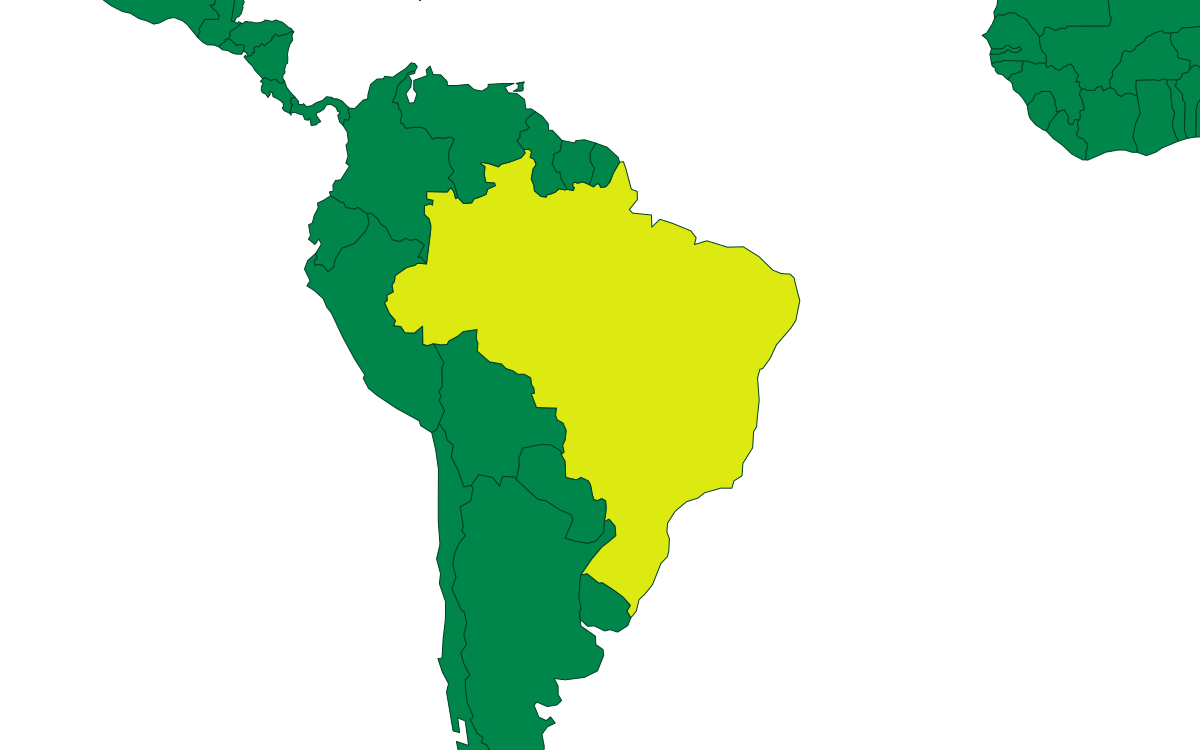
Brazil is full of contrasts – it is a global supplier of raw materials, including iron ore, coffee and beef. At the same time, the country is asserting its position as an emerging centre of technology. Almost two thirds of its 216 million inhabitants are aged between 15 and 64; life expectancy has been rising steadily for decades and was 76.02 years in 2024. Some 24 times the size of Germany, Brazil is also evolving into a green energy giant. It has huge potential in the areas of hydropower, wind and solar power, and biomass.
Digitalisation and green transformation are opening up new business areas
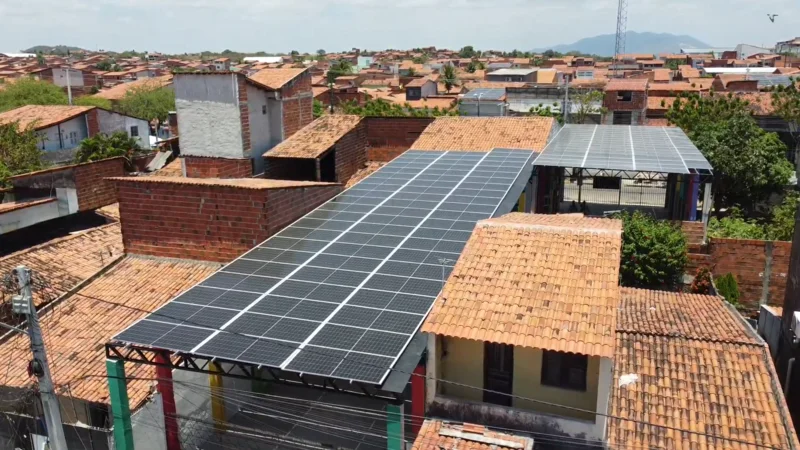
Brazil is investing heavily in renewable energies. States such as Piauí are expanding their port infrastructure for the export of green hydrogen to Europe. One example of this is Green Energy Park Piauí in the special economic zone of Parnaíba, which will produce 10.8 gigawatts of green hydrogen at low cost.
Circular economy is on the rise
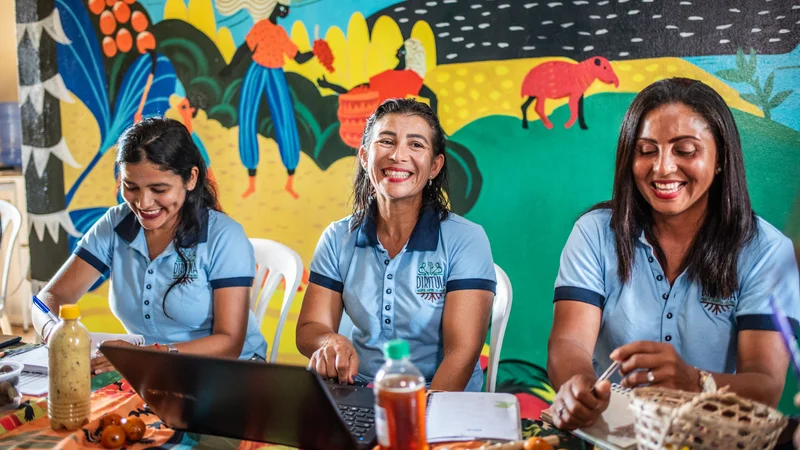
The circular economy is also growing. It is no coincidence that the World Circular Economy Forum 2025 in São Paolo was the first time that Latin America had hosted the event. German companies can benefit from support schemes for investment in landfills, recycling and energy generation from waste (waste-to-energy). A further focus is digital services, the necessary skills for which are taught through initiatives such as AWE’s Women Going Digital project. For example, the authorities in São Paulo are investing more than 200 million US dollars in the digitalisation of administration.
Solid growth trajectory with minor setbacks
Brazil’s economy grew by 3.4 per cent in 2024. Although growth is expected to fall to 1.9 per cent in 2025, it should remain stable in the long term. The gross domestic product (GDP) is around 2.12 trillion US dollars and the unemployment rate currently stands at 6.5 per cent.
Key economic sectors are industry and mining (21.9 per cent share of GDP), trade, restaurants and hotels (12 per cent), transport, logistics and communication (6.9 per cent), and agriculture (6.9 per cent).
Brazil achieved a trade surplus of almost 60 billion US dollars in 2024, mainly from exports of raw materials. The most important exports include soy, meat and oil. It enjoys close economic relations with the EU – especially with Germany, its third-largest source of imports.
Politically stable, but under pressure
Brazil intends to implement sweeping tax reforms in 2025. This should make it easier to levy consumption taxes and cut bureaucracy. Customs policy is complex, especially with the US import tariffs of 50 per cent recently imposed by Donald Trump fuelling uncertainty. In political terms, the country is stable but polarised, which can make reforms more difficult. Freedom House rates Brazil as ‘Free’ politically and socially, with an overall score of 72 out of 100 points. However, at 51.6, the Gini index points to a high level of inequality, while the score on Transparency International’s Corruption Perceptions Index is 35 out of 100, placing the country in 107th position worldwide.
Five sectors with potential for German companies
Brazil offers a large economy, diversity of resources and innovative strength – ideal starting points for German companies involved in development activities.
The develoPPP programme and the Deutsche Gesellschaft für Internationale Zusammenarbeit (GIZ) GmbH, among others, provide support and funding. AWE advises companies on the implementation of relevant development projects on the ground.
Opportunities exist in five areas in particular:
- Renewable energies (solar, wind, biomass)
- Industrial decarbonisation
- Sustainable agriculture
- Digital solutions in education, health and administration
- Critical raw materials for electromobility, energy storage and high-tech industries (lithium, niobium, cobalt)
AWE also provides advisory services on water management and waste management.