Unique interface between north and south
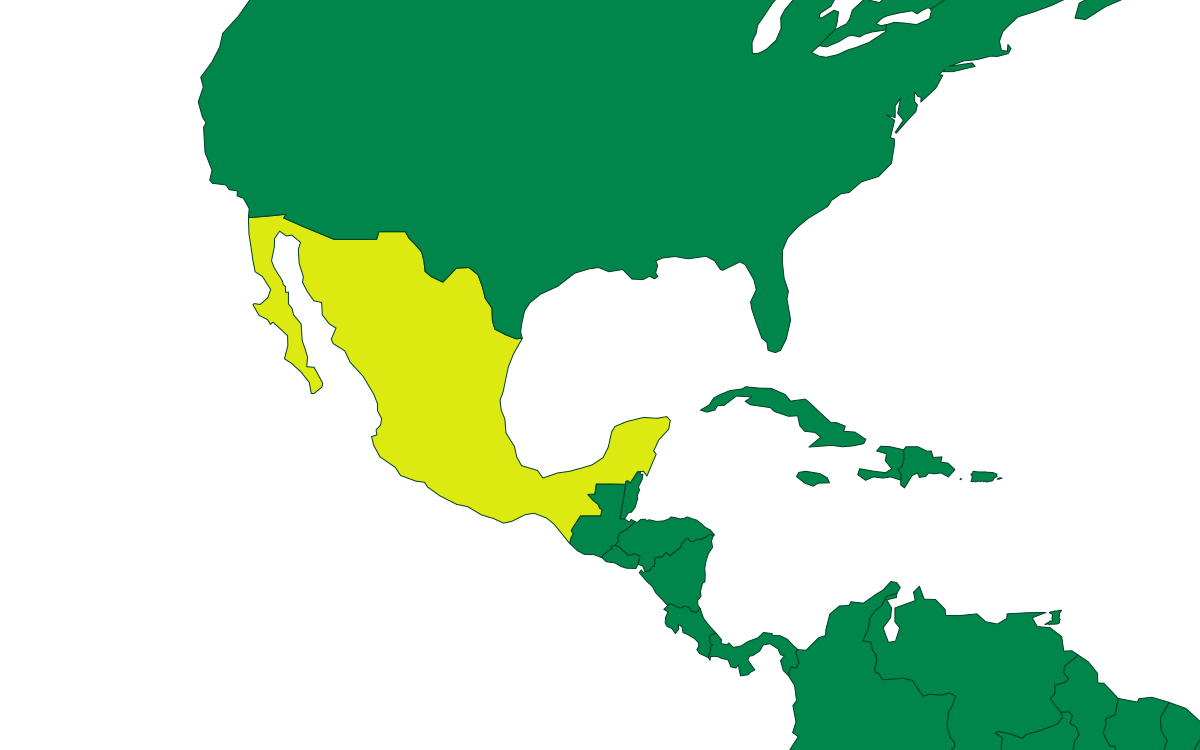
Mexico is uniquely positioned: linguistically the country is part of Latin America, but geographically it is part of North America. In 2024, Mexico actually leapfrogged both China and Canada to become the United States’ largest trading partner, with a trade volume of almost 850 billion US dollars. This underlines the importance of the Mexican economy as an interface between north and south.
Although the World Bank classifies Mexico as an upper-middle-income economy, society is deeply divided as more than a third of the population lives in poverty. This affects rural regions and Indigenous Peoples in particular.
Mexico is a very urban and relatively young country. Some 82 per cent of its 130 million inhabitants live in cities. The median age is a little over 29. With a literacy rate of 95 per cent, Mexico is in the upper mid-range of countries.
Ambitious growth plans
The automotive industry plays an important role in the Mexican economy, accounting for a quarter of all exports. The transition to e-mobility is a major issue in the industry and is particularly relevant for suppliers. The country also manufactures many electronic and household appliances, as well as the associated sensors, making this the country’s second most important sector.
Mexico, however, is not content to stand still. With its Plan México, the government wants to make Mexico the world’s tenth largest economic power. A budget of 270 billion euros had been made available for this purpose. The aim is to not only channel these funds into established sectors, but also strengthen new and less competitive industries. These include the aviation, semiconductor and textile industries as well as renewable energies. The government wants to bolster renewable energies, but also other areas of the green economy, such as the circular economy and ecotourism – for example by promoting the training of skilled workers.
Tariff policy is creating uncertainty
The Mexican economy actually rebounded strongly from the COVID crisis, posting growth in excess of six per cent in 2021. Since then, however, there has been a reversal in this trend, with growth slowing gradually. The economy may even contract in 2025 due to the tariff policy of the United States (US). This is also reflected in the unemployment rate, which is forecast to rise from 2.8 per cent to 3.85 per cent in 2025.
Two sectors dominate the Mexican economy, namely industry and mining on the one hand, and trade, restaurants and hotels on the other. Together, they account for more than half of economic output. Europe – and Germany in particular as the EU’s most important trading partner – maintains close ties with the Latin American country.
The situation is turbulent
The Morena party (Movimiento Regeneración Nacional) has held political power since 2018. Initially under President Andrés Manuel López Obrador and now President Claudia Sheinbaum, Morena pursues a policy of social programmes and institutional reform. The latter includes the controversial direct election of judges, which critics say could jeopardise the separation of powers and pose a threat to democracy. The country continues to be plagued by organised crime and a high level of corruption by international standards (ranking 141th out of 182 countries in the CPI 2025).
With a Freedom House score of 58 out of 100, Mexico is considered ‘Partly Free’. The Gini index score is 43.5, indicating a high level of social inequality.
Many opportunities for German companies
The government’s current strategy shows that Mexico wants to make its economy fit for the future. German companies can benefit from this too. Funding is available through develoPPP, for example. At the same time, AWE supports German companies in identifying and implementing development-related projects in Mexico. The biggest opportunities for companies lie in five areas:
- Automotive industry and e-mobility: already the most important pillar of the Mexican economy.
- Electronics and household appliances: already strong and expected to grow further.
- Renewable energies: part of the money from Plan México is to be channelled into renewable energies and drive industrial decarbonisation, for example.
- Aircraft industry: the sector is playing an increasingly important role in achieving Mexico’s growth targets.
- Training of skilled workers: both for the green economy and an ageing society.