
International trade connects people, ideas and markets. It gets products to where they are needed, creates jobs and gives companies opportunities to grow. Yet for many firms, cross-border trade often presents challenges such as too many forms to fill in, excessive waiting times and a lack of transparency. Every delay leads to lost time, money and sometimes even business opportunities.
The German Alliance for Trade Facilitation aims to demonstrate on a global scale that things can be done differently. Through active partnerships, it helps countries, particularly those in the Global South, to make their international trade procedures simpler, quicker and more reliable. Its projects focus on digital solutions and knowledge transfer. In this way, Alliance members not only contribute to the United Nations 2030 Agenda, but also provide practical benefits by making trade easier for companies. And when companies can trade more easily, this leads to investment, new opportunities and economic development – across borders and beyond.
The basis for the Alliance’s work is the World Trade Organization’s Trade Facilitation Agreement, which provides a global framework that aims to bring about fair and transparent trade. How can you become part of the Alliance and discover the benefits of membership? Key questions at a glance:
Frequently asked questions
Who can become part of the Alliance?
The German Alliance for Trade Facilitation is open to all organisations that wish to actively contribute to making cross-border trade more efficient. This includes public authorities and ministries, companies of all sizes, international partners, logistics service providers and business associations that represent the interests of their member companies. The key requirement is a willingness to contribute knowledge, set common priorities and develop tangible improvements. The Alliance thrives on open and frank collaboration: the more varied the perspectives around the table, the more realistic and effective the solutions for subsequent implementation will be. The Alliance is currently made up of 27 economic actors.
What are the Alliance’s main areas of focus?
The Alliance focuses on areas where reforms can have the most immediate impact. These include digital customs clearance systems, transparent access to regulations, modernised border controls, improved risk management and more intensive cooperation between public administration and business. Another key focus is the ongoing development of regional trade agreements, for example within the framework of the African Continental Free Trade Area.
Detailed information about the Alliance’s projects can be found in our videos and downloads.
How do companies benefit from the Alliance’s work?
There are multiple benefits for companies, including significantly shorter processing times, lower costs and better predictability along their supply chains. Alliance members also have the opportunity to ensure that their own experience is fed directly into reform processes, which is a major advantage for small and medium-sized enterprises in particular. The close cooperation with public authorities reduces misunderstandings, improves process clarity and enables faster implementation of digital solutions. This gives companies greater scope for action, enables them to react more flexibly to market opportunities and improves their competitive position in international trade.
How does the Alliance’s work strengthen countries in the Global South?
The Alliance supports countries in the Global South in modernising their administrative systems, training staff, and rolling out digital solutions sustainably. This makes processes faster and simplifies import and export processes for local companies. These improvements encourage investment, create jobs and strengthen regional value chains. For many countries, this is an important step in consolidating their position in the international economic system and strengthening economic resilience and independence.
In which countries and regions is the Alliance active?
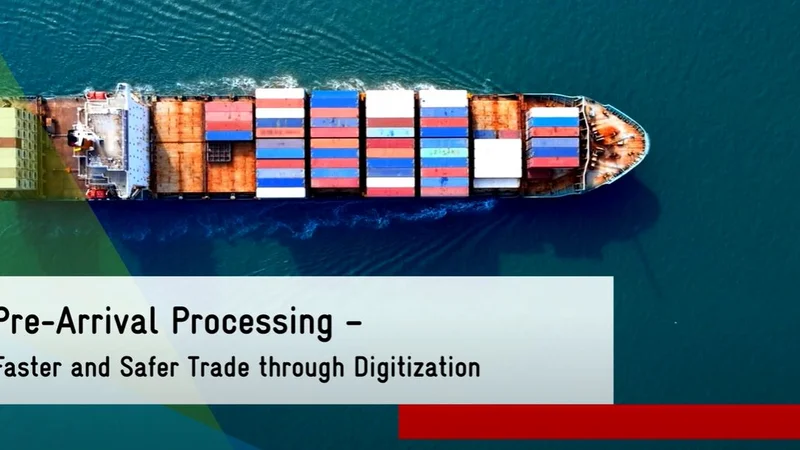
The German Alliance for Trade Facilitation currently operates in around 20 emerging economies and developing countries around the world. It implements projects in countries such as Cambodia and Sri Lanka and in other partner countries where inefficient administrative structures create major barriers to cross-border trade. The aim is to develop practicable solutions that can also be adopted by authorities in other countries. One example of this is the ‘pre-arrival’ system for faster customs clearance of express consignments, which is already in use in Kosovo, Montenegro, Moldova and North Macedonia.
Detailed information about the Alliance’s projects can be found in our videos and downloads.