An archipelago of superlatives: populous, young, diverse
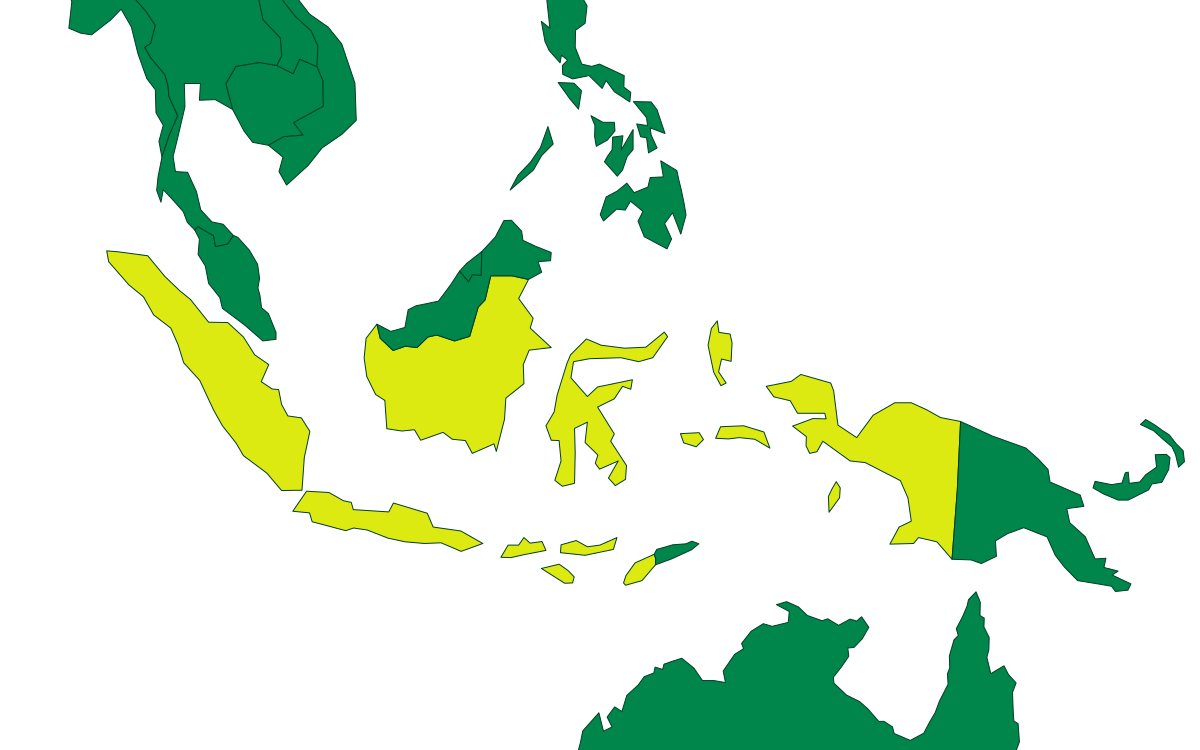
With over 280 million inhabitants, Indonesia is the fourth most populous country in the world. Over 300 different ethnic groups live in this multi-ethnic state, which stretches more than 5,000 kilometres along the equator. Indonesia has been strategically vital to maritime trade in Southeast Asia for thousands of years due to its location between the Indian and Pacific Oceans.
Around half of the population is under 30, and access to higher education is growing. The literacy rate nationwide is over 95 per cent. In urban centres in particular, a consumer-friendly middle class is emerging. Although almost 87 per cent of the population is Muslim, the country is characterised by enormous religious and cultural diversity, which is even reflected in the national motto of Bhinneka Tunggal Ika, or ‘unity in diversity’.
Project development in booming sectors: Indonesia as a market of the future
Indonesia has significant ground to make up in sunrise sectors such as the circular economy, renewable energies, energy efficiency and mobility. The need for action is particularly acute in Indonesia’s waste management sector: hundreds of thousands of tonnes of waste end up in rivers and the ocean every day.
The government is pursuing ambitious expansion targets in the areas of solar, geothermal and bioenergy, while inefficient industrial plants offer great potential for energy savings. Germany supports these efforts via the Just Energy Transition Partnership (JETP). There are considerable opportunities for technology providers, but the competition from Asia is strong. Project development is therefore likely to be a more attractive option for German companies. The need for investment in infrastructure also creates opportunities for project developers and technology providers.
Sectors in focus: Indonesia’s economy at a glance
With a gross domestic product (GDP) of approximately 1.4 trillion US dollars (2024), Indonesia is the largest economy in Southeast Asia. Indonesia’s economic growth (over 5 per cent per year) makes it one of the most dynamic economies in Asia. Companies benefit from a large pool of young labour and comparatively low wages.
As of 2024, the main sectors driving the economy were services (around 44 per cent of GDP), industry (39 per cent) and agriculture (13 per cent). The manufacturing sector’s share of GDP is falling steadily and is currently below 20 per cent. The government is responding by facilitating investment and pressing ahead with the transition to Industry 4.0 in food processing, automotive manufacture, textiles, electronics and chemicals through the ‘Making Indonesia 4.0’ initiative.
Did you know that…
- Indonesia is the most populous Muslim country in the world with over 280 million inhabitants?
- the economy grew by around five per cent in 2024, making it one of the most stable growth rates in Southeast Asia?
- the country is currently home to seven fintech unicorns – the second highest number in Southeast Asia after Singapore?
Politically stable and strategically attractive
Indonesia is a member of the Group of 20 (G20), BRICS and the World Trade Organization (WTO) and is the only democracy in Southeast Asia. Indonesia’s membership of ASEAN (Association of Southeast Asian Nations) makes it easier for companies to gain access to other countries’ markets in Southeast Asia thanks to the free movement of goods, the lowering of tariffs and harmonised standards. The EU-Indonesia free trade agreement was signed in September 2025. Separate negotiations were also held on investment protection. Indonesia has to date been regarded as largely stable in political terms, achieving considerable success in the fight against poverty. Corruption remains a challenge (position 109 out of 182 in the Corruption Perceptions Index (CPI) 2025, making it a mid-ranking country in global terms), as does bureaucracy. Freedom House ranks Indonesia as ‘Partly Free’. There is potential for reform of the rule of law, religious tolerance, women’s rights and social inequality.
Still underestimated by Europe
Experts on the ground stress that Indonesia has been underestimated to date, despite its potential. Those who overcome the trade barriers and complex structures stand to benefit from limited competition and attractive growth opportunities. German expertise has a particularly good reputation in Indonesia. The opportunities for companies to enter the market, for example through the develoPPP programme or joint pilot projects with local partners, are good. The Agency for Business and Economic Development (AWE) provides support by offering advisory services, a network and an overview of funding programmes.
The government has ambitious plans to make the country fit for the future. However, implementation remains a challenge. Nevertheless, the following four sectors offer significant potential:
- Energy
- Mobility
- Waste management
- Digitalisation
Since 2025, support has come from the Partners in Transformation Desk Southeast Asia, which combines the services offered by the German Chamber of Commerce Abroad with GIZ’s regional expertise and networking activities, pooling these as a central point of contact for companies.