
Urban, young and diverse
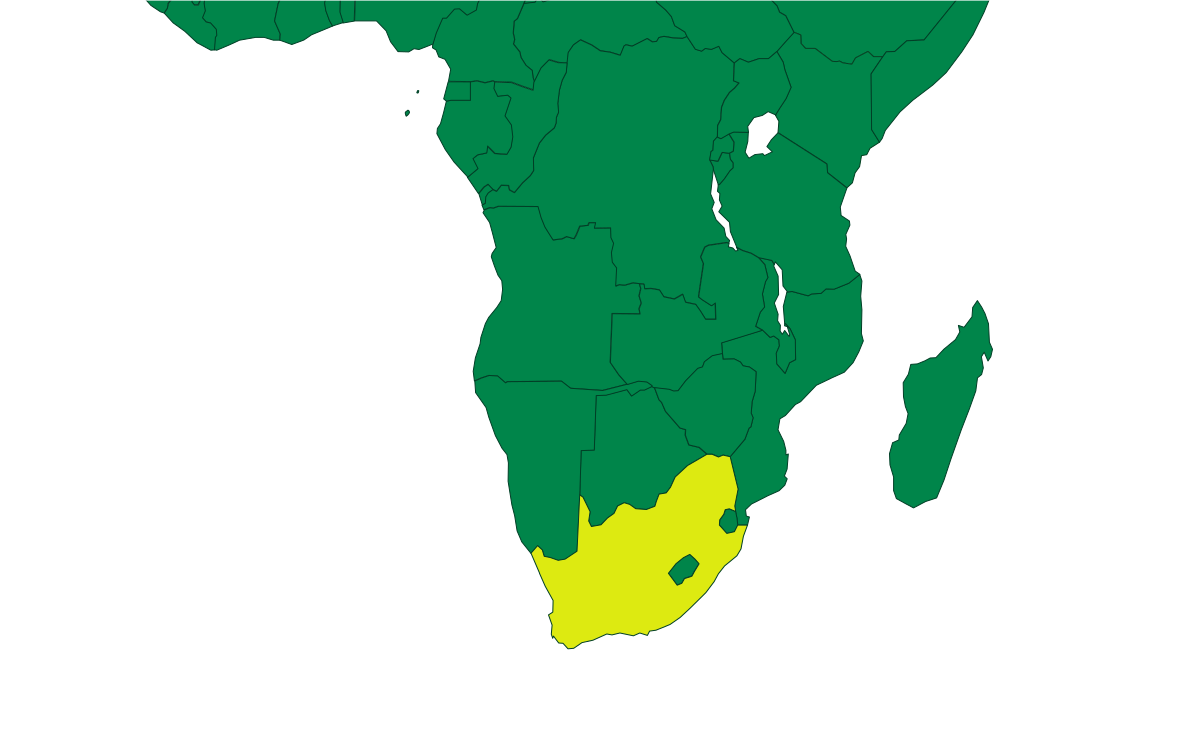
With over 60 million inhabitants, South Africa is the most populous country in Southern Africa. Around two thirds of South Africans live in urban centres – and this figure is rising. The population is young and dynamic, with a median age of 28.7. The literacy rate is over 94 per cent and access to education is constantly improving.
Despite high levels of unemployment and social inequality, the government is investing in training and skilled migration. The country’s social fabric is shaped by ethnic and cultural diversity, a vibrant civil society and free media. English is an official language and is frequently used as the day-to-day language in urban areas – often with influences from Afrikaans, isiZulu and other national languages.
Regionally networked, with demand from across the continent
South Africa is the most industrially advanced country in sub-Saharan Africa. Under Phase II of the Operation Vulindlela reform programme, the government is investing in infrastructure, energy and municipal reform. Sustainable solutions in water management, transport and energy supply are particularly sought after. The visa procedure for highly skilled immigrants (Critical Skills Visa) has been simplified.
Through the Southern African Customs Union (SACU), the Southern African Development Community (SADC) and the African Continental Free Trade Area (AfCFTA), South Africa is closely integrated into regional markets – with duty-free access to more than 1.4 billion consumers. The European Union (EU) is South Africa’s most important trading partner; the new Clean Trade and Investment Partnership (CTIP) strengthens cooperation and promotes investment in green technologies, critical raw materials and sustainable industry.
The end of stagnation?
Following years of stagnation, South Africa’s gross domestic product is estimated by the World Bank to have grown by 1.3 per cent in 2025. The most important sectors of the highly diversified economy are services (retail, business services, health), industry (automotive, food, chemicals) and mining.
Exports are based primarily on raw materials – with platinum, gold and critical minerals required for electromobility and the production of hydrogen. The government is promoting local value creation and the transition to electromobility. Inflation fell below three per cent in 2024, which is encouraging investment. Major start-up hubs for investors can be found in Pretoria and Johannesburg.
Did you know that…
- South Africa was one of the top African countries for start-up funding in 2024, with funding totalling 2.3 billion US dollars?
- for the first time in a long while, the power grid in South Africa went 300 days without load shedding in 2024 following years of problems with power outages?
- South Africa’s automotive industry is the largest on the continent?
Strong democratic foundation, albeit with risks
South Africa is a constitutional democracy with stable institutions. In 2024, the government was formed for the first time by a coalition (comprising the African National Congress (ANC), the Democratic Alliance (DA) and other parties). This favours political reform. The
country is rated as ‘Free’ (81 out of 100 points) on the Freedom House index. Corruption poses a major risk, despite South Africa’s status as a mid-ranking country by international standards (ranked 81 out of 182 in the CPI 2025). With a Gini score of 0.63, social inequality is among the highest worldwide.
Regulation and tariffs are transparent but complex. The new Expropriation Bill of 2025 created uncertainty among investors. Under the bill, for example, land could be expropriated – without compensation – from landowners who do not use their land. Legal experts advise taking additional safeguards.
Energy and health in demand
Companies have long regarded South Africa’s economy as an important stepping stone to neighbouring countries. Key sectors are:
- Circular economy and water management: there is ground to be made up in recycling and water infrastructure, and thus investment opportunities.
- Renewable energies and environmental technology: solar, wind, green hydrogen and energy storage are key future-oriented sectors.
- Health care: health research, pharmaceutical production and health care services are a rapidly growing market.
- Digital economy: demand for digital services, for example in agriculture, is constantly growing.