At a glance
Why is this an important area for German companies?
A shortage of skilled workers is posing an increasing risk to the competitiveness of German companies. At the same time, a young, well-educated generation is coming of age in many regions of the Global South – a generation that often cannot find enough suitable jobs in their own countries.
Opportunities for growth:
Global skill partnerships offer an opportunity for shaping labour migration so that it is safe, fair and sustainable and of equal benefit to people and businesses in the countries of origin and destination.
Here’s how companies can get involved:
Companies engage with partners in countries of the Global South to jointly train young professionals locally, involve them in international projects and cooperation arrangements and help them develop their language skills.
Successfully shaping skill partnerships
Unlike traditional recruitment, global skill partnerships focus on shared benefits and the development of long-term skills. Young people are trained in their home countries – with the option to build careers locally or through international partnerships.
The objective: a win-win-win situation
- Win for migrants: they obtain ‘decent work’ under fair conditions and safe migration routes
- Win for countries of origin: they benefit from knowledge transfer by returning skilled workers, diaspora engagement, remittances, relief for strained labour markets and support in shaping sustainable migration
- Win for countries of destination: they benefit from much-needed skilled workers and apprentices who boost the competitiveness of businesses and key economic sectors
✓ The benefit for businesses: global talent development
Global skill partnerships help companies build worldwide talent pools and support sustainable development. Rather than recruiting skilled workers on an ad-hoc basis, they build sustainable long-term partnerships for workforce development.
The model: partnerships that work
From SMEs to large corporations, from international IT firms to local care services – companies have a wide variety of requirements when it comes to their skilled workers and young professionals. Skill partnerships offer a wide range of models to meet these needs.
- Training partnerships: Companies support technical and vocational education and training (TVET) on the ground in the country of origin, often in cooperation with GIZ or local institutions. International skilled workers are prepared to successfully enter the German labour market through language courses, integration workshops and personal advice.
- Digital partnerships: Companies develop diverse, highly skilled, international project teams to progress digital innovation projects, for example.
- Nearshoring: Skilled workers who are trained locally work in service or IT centres directly in their country of origin.
Vocational training: practical, needs-oriented, sustainable
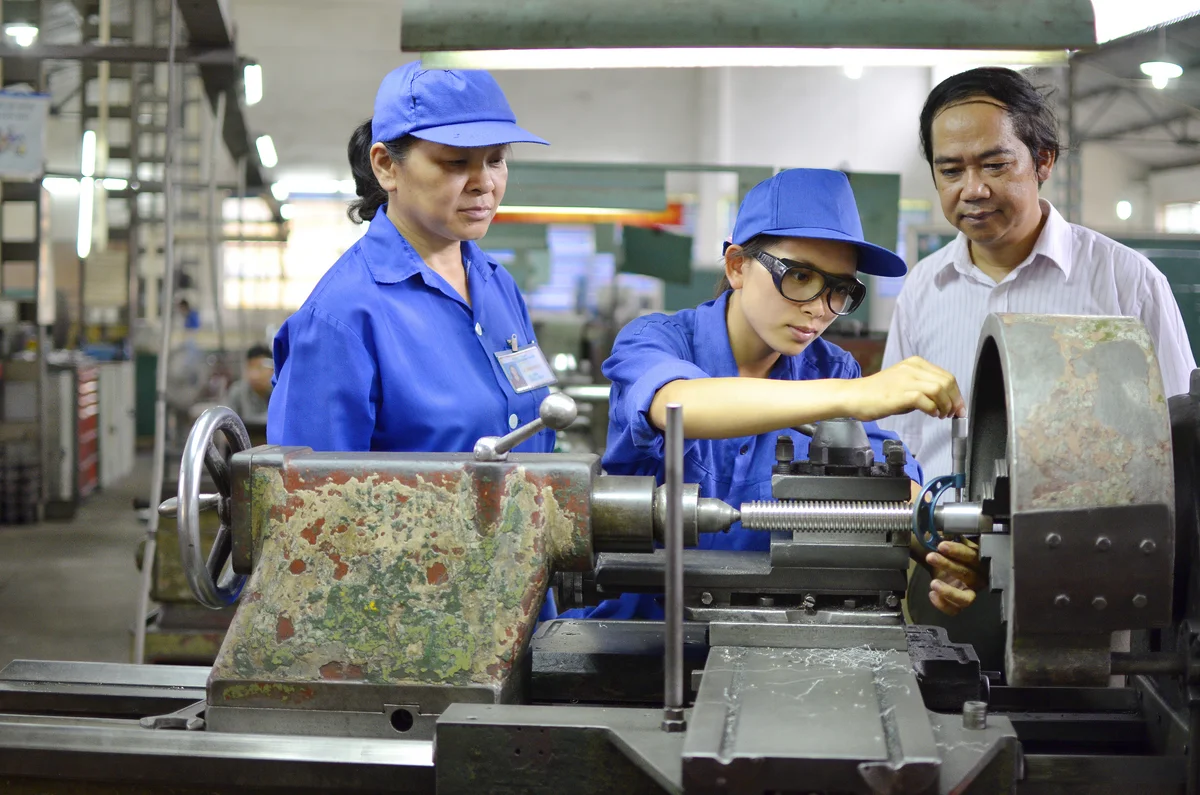
In collaboration with businesses and German chambers of commerce abroad (AHKs), AWE develops bespoke training and further education programmes, allowing us to achieve two objectives at once – establish standards for TVET in the partner country, and provide the German economy with a talent pool that is equipped to meet its needs.
Our service package:
- Development of basic and further digital training programmes based on business needs (for example, In-house Sustainability Manager with AHK Mexico)
- Career guidance to increase the number of apprentices in occupations where there is a shortage of workers
- Methodological training for trainers in vocational schools and companies that operate under the dual system (for example, in Ecuador or Colombia)
- Advice on TVET-specific support and funding mechanisms within the Partners in Transformation network
- Use of AWE networks to link up companies willing to provide apprenticeships
Support services for businesses
Developing and implementing a global talent strategy can be a major challenge for SMEs in particular,
AWE matches businesses with the right partners at every stage of this process – and advises on suitable international cooperation programmes:
Initial consultation and networking
- Advice on suitable development cooperation programmes
- Advice and support in forging (regional) partnerships between industry stakeholders in Germany (chambers of commerce, trade associations, companies) and selected partner countries
Preparation and support throughout the migration process
- Support for the development of training programmes and local or web-based pre-integration specialist courses through chambers of commerce and associations.
- Support in organising support measures for the social integration of skilled workers in Germany, together with suitable partners.
Finding the right partners
Companies can draw on a broad support network to establish partnerships with skilled workers.
Partnership Approaches for Development-oriented Vocational Training and Labour Migration (PAM)

Train skilled workers and support labour mobility with PAM: This initiative combines the fair recruitment of young international talent with measures to strengthen TVET in their countries of origin.
Read moreTowards a Holistic Approach to Labour Migration and Mobility Governance in North Africa (THAMM plus)

Supports the fair and sustainable recruitment of apprentices and skilled workers from Egypt, Morocco and Tunisia.
Read moreTriple Win

The Triple Win programme places qualified care staff from abroad with German employers.
Read moreAFRIKA KOMMT!
The AFRIKA KOMMT! programme has been bringing together young African leaders and German companies since 2008. Work placements and training programmes in Germany facilitate the transfer of knowledge, support diversity and lay the foundations for sustainable economic cooperation. The programme is organised by GIZ.
Read moreVocational training partnerships
German chambers of commerce and trade associations enter into Chamber and Association Partnerships (KVP) and Vocational Education and Training Partnerships (BBP) with partner institutions in developing countries and emerging economies to improve practice orientation and needs-based alignment of TVET. The aim here is to train skilled workers who will help support the sustainable development of their countries of origin. For example, the PartnerAfrica programme, which forms part of the Special Initiative ‘Decent Work for a Just Transition’, assists German chambers of commerce and associations in implementing projects to improve vocational training and build capacities in Africa. The programme is implemented by sequa gGmbH.
Senior Expert Service (SES)
The Senior Expert Service (SES) deploys retired experts and executives on a voluntary basis. Since 2017, it has also been assigning experts through the Weltdienst 30+programme. With a focus on developing countries and emerging economies, these experts support SMEs, public authorities, educational and social institutions in accordance with the principle of ‘helping people to help themselves’. The aim is to share knowledge and experience. The programme is run by the umbrella associations that represent the German private sector.
Weitere Infos zum SESCentres for Migration and Development (ZME)
Centres for Migration and Development provide advice for people who wish to migrate legally to Germany, Europe or within their region in order to work or pursue further education.
Read moreSelected best practices: Learning from Others

Hotel and catering sector
Preparation and recruitment of trainees in Nigeria for the hotel and catering sector.
Read more
Nursing
In Germany, nurses are urgently needed, while qualified professionals from abroad often struggle to find suitable employment. The “Triple Win” programme brings both sides together fairly and reliably.
Read more
Electrical Engineering
As part of the “International Trainees” project, the company recruited international trainees to train as electronics technicians for industrial engineering.
Read moreMechatronics
In an interview, an HR manager at MAN Truck & Bus Deutschland GmbH and a Tunisian mechatronics technician explain how GIZ brought them together professionally and how this led to a career opportunity in Braunschweig.
Read more
IT Security
A develoPPP-supported training programme qualifies IT professionals in East Africa as cybersecurity experts, strengthens the local digital economy and helps companies close security gaps.
Read more