A democracy between two oceans
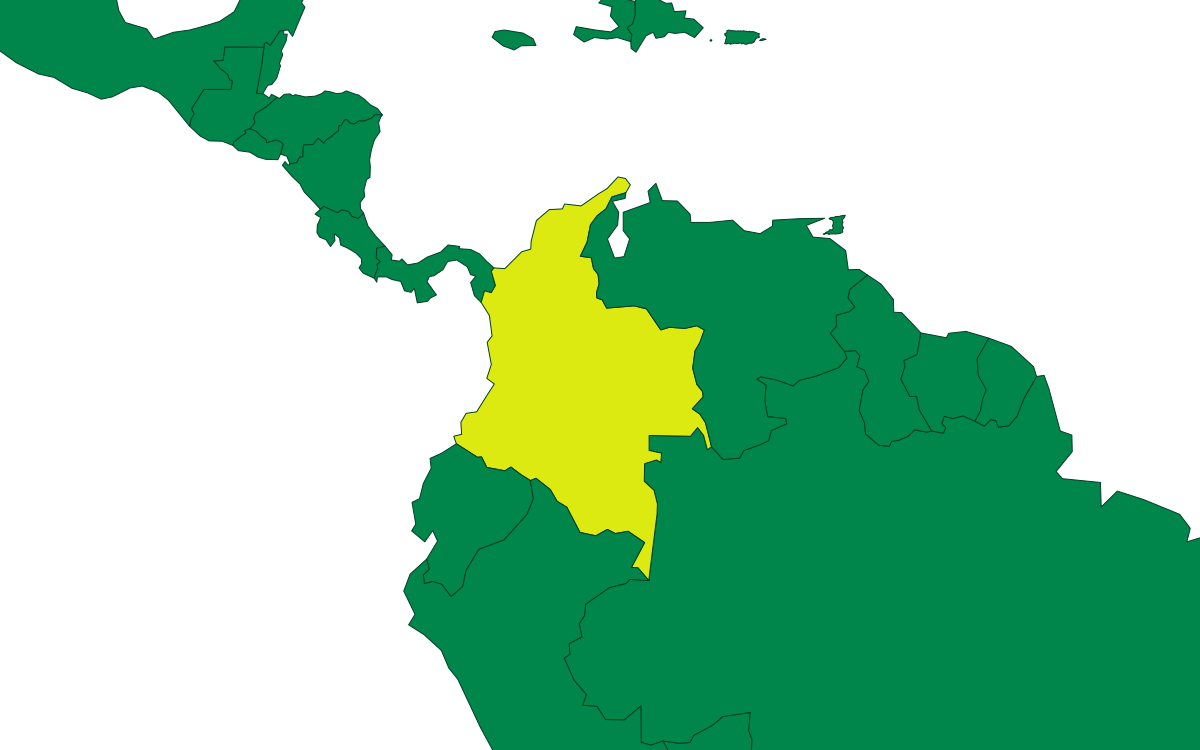
Colombia is one of South America’s most long-standing democracies. However, the country’s history is marked by violence, numerous civil wars and the fight against organised crime. Political actors face the constant challenge of maintaining peace within the country and safeguarding the political and civil rights of the population.
More than 80 per cent of the country’s population of more than 53 million people live in urban areas. The literacy rate is over per cent.
At the same time, Colombia is the second most biodiverse nation in the world. This is down to its varied landscapes, which include mountains, wetlands, savannah and rainforest. The country also has coastlines on both the Atlantic and Pacific Oceans.
The green economy is gaining momentum
With over 3,000 kilometres of coastline, Colombia offers tremendous potential for renewable energy projects, such as offshore wind farms. The government intends to harness this opportunity and achieve a 51 per cent reduction in the country’s greenhouse gas emissions by 2030. As part of this, it is launching a wide range of promising initiatives. It aims to decarbonise industry, promote renewable energies and expand corresponding infrastructure such as power stores.
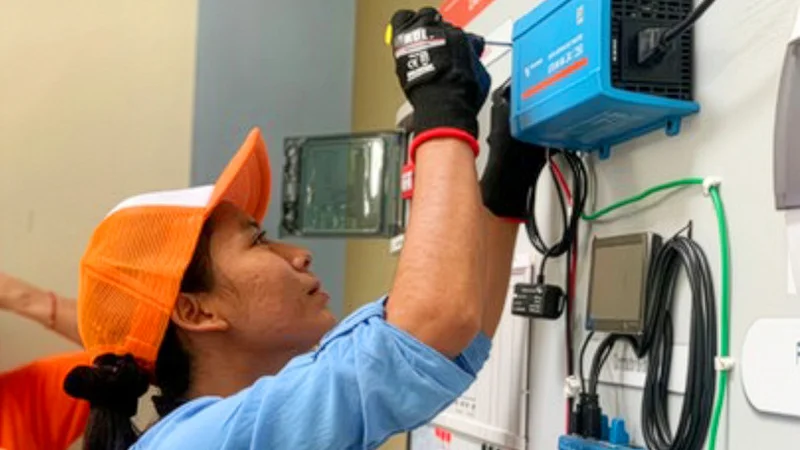
The focus is on green hydrogen and the circular economy and on new skilled workers, who are to be equipped for jobs in the future through dual training programmes in green skills. At the same time, the government has pledged to supply the entire population (more effectively) with energy as part of the energy transition and to create new sustainable sources of income, for example through more ecotourism.
The economy is experiencing stable growth
Colombia is South America’s third largest economy, with a gross domestic product (GDP) of USD 418.8 billion. It grew by 1.7 per cent in 2024 and is set to grow by at least 2.4 per cent per year from 2025. The unemployment rate is 10 per cent and inflation is at 4.7 per cent.
The key sectors are mining and industry (22.9 per cent of GDP), trade, restaurants and hotels (15.7 per cent), and agriculture (9.7 per cent). Colombia’s main export goods are petroleum, petroleum products, coal and coffee. Germany is one of the country’s key trading partners within the European Union (EU). German companies have a particularly strong presence in mechanical engineering, the automotive industry, the chemical industry and renewable energies.
Between civil conflicts and ambitious climate action targets
Colombia has been shaped by decades of civil conflicts, for example with the FARC rebels. In 2016, the government signed a peace agreement with the guerilla group; however, attacks still continue. Crime syndicates also pose a risk to state security. The government is seeking to calm the conflicts while taking a leading role with its ambitious climate goals.
Freedom House’s index rates Colombia as free, with a score of 70 out of 100. The country ranks 99th out of 182 countries worldwide on Transparency International’s Corruption Perceptions Index 2025. A Gini coefficient of 53.9 indicates high income inequality.
In the future, Colombia could benefit from the EU-Mercosur trade agreement.
Partnership with Germany facilitates market entry
With its course for the future, the Colombian Government aims to protect the climate and rainforest while making the country less reliant on fossil fuels. This creates a host of business opportunities for German companies. The following areas are particularly attractive:
- Renewable energies
- Electromobility
- Decarbonisation of industry
- Circular economy
The Colombian-German Climate and Just Energy Transition Partnership provides a framework that makes it easier for German companies to gain a foothold. Locally, the German-Colombian Chamber of Commerce (AHK) and the Deutsche Gesellschaft für Internationale Zusammenarbeit (GIZ) GmbH and others connect the relevant actors and facilitate access to funding.
AWE advises on programmes such as develoPPP, which also accepts applications for projects in Colombia. Furthermore, Colombia is a partner country of the Import Promotion Desk (IPD).