A diverse giant
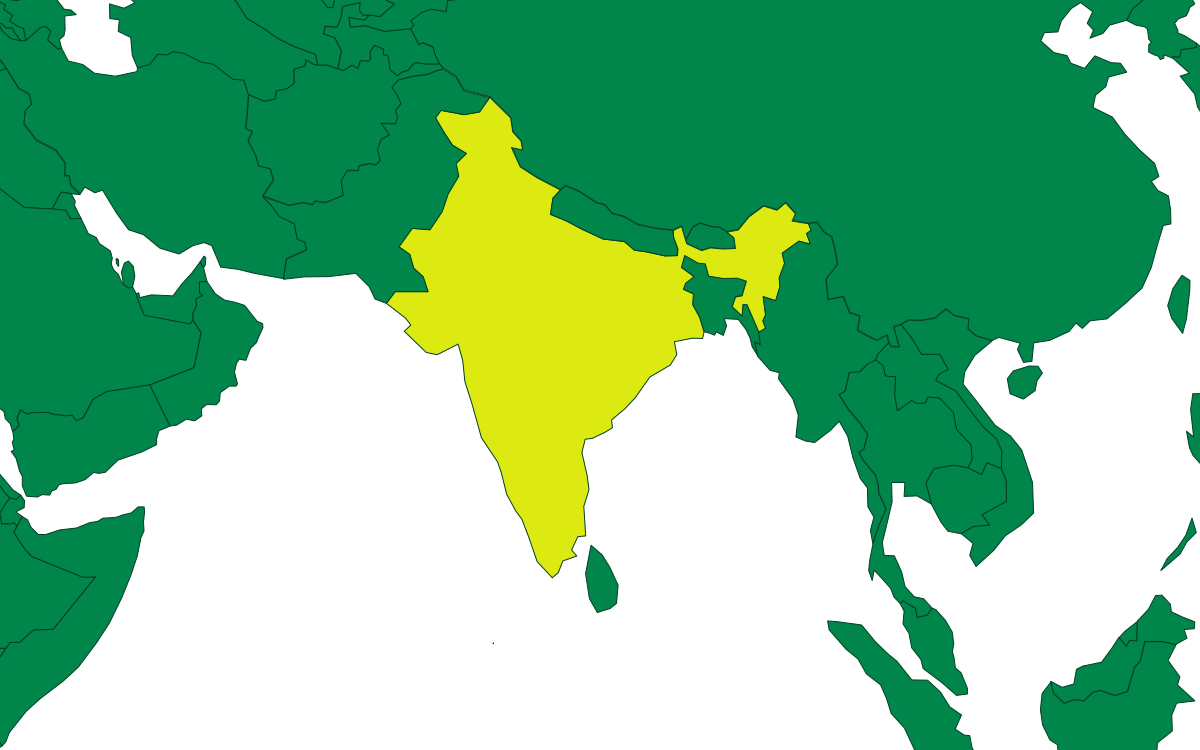
In 2023, India overtook China to become the most populous country in the world, with almost 1.5 billion people. It combines rich cultural diversity with rapid urbanisation and a young, motivated population. However, education levels vary greatly, and the literacy rate is just 82 per cent.
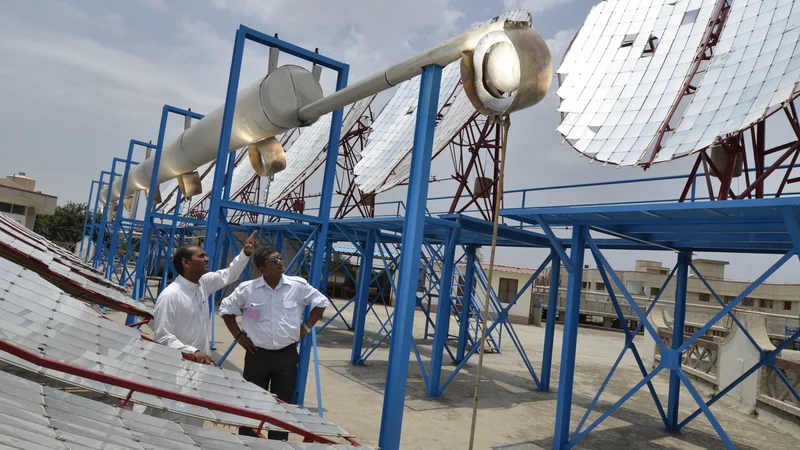
Owing to its sheer size, India spans several different climate zones and boasts exceptional natural landscapes such as the Himalayan mountains, the spectacular Nohkalikai Falls and the Thar Desert. This diversity offers opportunities for generating renewable energy, for example in solar parks and hydroelectric power plants.
Ambitious plans to tackle climate change
India is affected by climate change more than almost any other country, as evidenced by recurring droughts, floods and heatwaves. At the same time, domestic industry in India is the world’s third-largest emitter of greenhouse gases. Air and water quality is poor in many places.
The government is therefore pursuing ambitious targets with the aim of expanding renewable energy, electrifying transport and decarbonising industry. India wants to produce five million tonnes of hydrogen annually by 2030 and, as part of its nationally determined contribution, achieve net zero carbon emissions by 2070. Further opportunities exist in the circular economy and digitalisation. In innovation-driven India, the markets for AI and electronics in particular are expected to grow rapidly in the coming years.
Did you know that...
- what is believed to be the world’s largest hybrid solar/wind energy park, with a planned output of 30 gigawatts, is currently being built in the state of Gujarat in western India?
- every year, around 7 million tourists visit the Taj Mahal (on the outskirts of Agra), one of the most popular tourist attractions in the world?
- India is the world’s largest producer of spices, growing 75 of the 109 recognised varieties?
Strong growth and a persistent trade deficit
India has one of the fastest growing economies in the world. From 2025 to 2027, economic growth is expected to be around 6.5 per cent annually. The country’s gross domestic product has already reached USD 3.9 trillion, making it the world’s fifth-largest economy. Key economic sectors are financial services, IT, trade, transport and communication. India welcomes foreign investment. Over 2,000 companies from Germany have already established themselves on the Indian market, with a focus on the automotive, IT, machine tools, food, biotech/pharmaceuticals, energy and textile sectors.
Challenges currently facing India’s economy include a persistent trade deficit, high unemployment and the expansion of green infrastructure, which so far has been unable to keep pace with rapid economic growth.
Close ties with Germany and the EU
As the world’s most populous democracy with strong federal states, India combines an open economy with industrial policy programmes. The country is also an important partner for Germany and the EU. In addition to an energy partnership and a skilled labour strategy, Germany benefits from a free trade agreement concluded between India and the EU in early 2026, which has eliminated most customs duties.
In other areas, there is still work to be done. A Gini coefficient of 25.5 indicates significant social inequality, which could be partly due to the caste system, even though discrimination based on caste has been prohibited. The World Press Freedom Index of Reporters Without Borders ranks India 157th out of 180 countries, placing it in the bottom quartile.
Long-term partnerships matter
Companies wishing to do business in India will find growing future-oriented markets and a generally stable investment environment. Nonetheless, investors have to adjust to the specific market conditions there – for example, highly price sensitivity. Long-term success depends not only on partnerships among equals, but also on sustainable capacity building for the local population.
German development cooperation and economic cooperation are firmly established in India. The country has not only the largest bilateral German Chamber of Commerce Abroad (with seven offices), but also the largest portfolio of the develoPPP funding programme. The following future-oriented sectors, in particular, present attractive opportunities for sustainable investment:
- Renewable energy
- Technology for clean air and water
- Digitalisation and AI
- Electronics
- Pharmaceuticals and health
- Infrastructure and construction