
The gateway to the Balkans
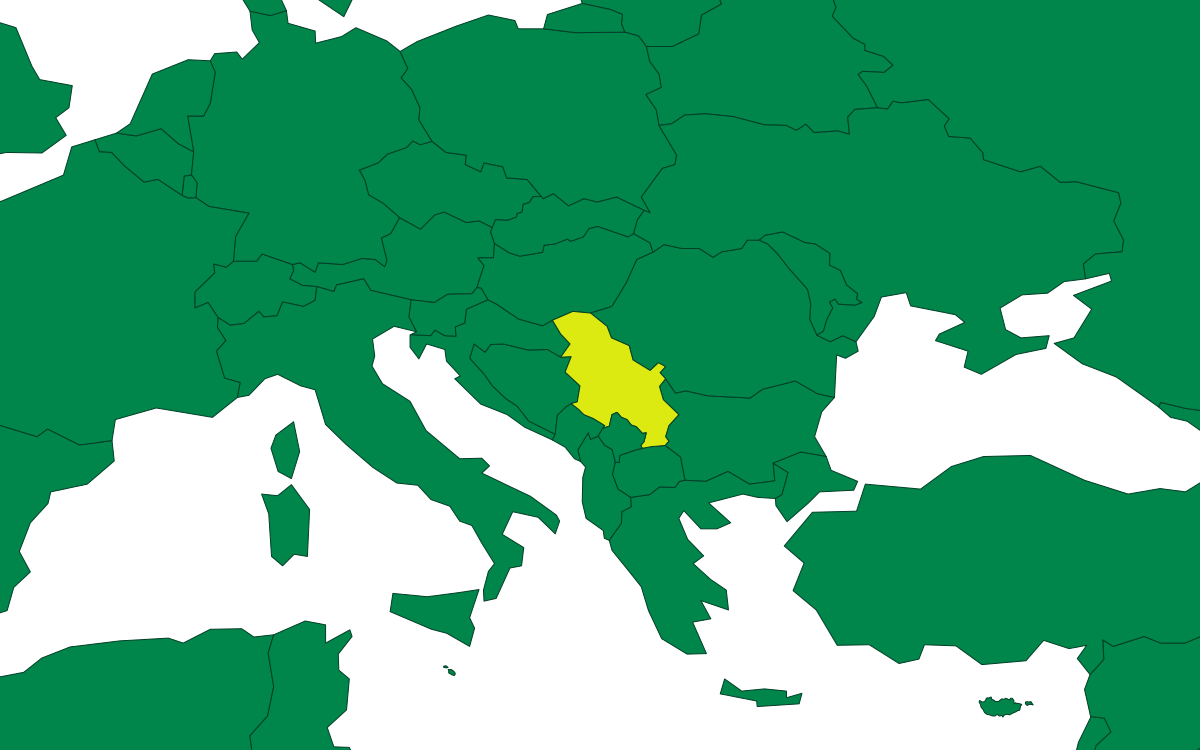
Serbia is centrally located in the Western Balkans, connecting markets in the EU, Middle East and Asia. Its well-trained, skilled workforce and competitive energy prices create the ideal conditions for the production and service industries.
Serbia has a population of 6.6 million, with a median age of 44.4 years and a life expectancy of 77 years. The cities of Belgrade, Novi Sad and Niš are thriving urban centres with a growing middle class. Serbia was granted EU candidate status in March 2012, and, since 2014, it and other Western Balkan countries have been part of the Berlin Process that aims to foster cooperation and EU integration.
A popular location on the EU’s doorstep
Serbia is committed to green industrialisation and expanding forward-looking sectors such as electromobility, the circular economy and digitalisation. The country’s industrial base and well-trained workforce offer opportunities for technology firms and supply companies that want to invest in sustainable production. Serbia’s proximity to the EU and the population’s good English and German language skills make it an increasingly attractive location for nearshoring.
Key sectors for German investors are the automotive supply industry, mechanical engineering, IT, metalworking and renewable energy. Around 900 German companies are active in Serbia, most of them small and medium-sized enterprises. They employ approximately 80,000 people locally.
ICT sector drives growth
The Serbian economy is growing at a steady pace. Its gross domestic product (GDP) amounted to USD 89 billion in 2024 and economic growth stands at 3.9 per cent. Key economic sectors are services (such as ICT, trade, logistics and tourism), manufacturing and construction. The country exports machinery, foodstuffs and electronics, mainly to the EU. The government supports Industry 4.0 and is investing in infrastructure, AI and biotechnology.
The ICT sector in particular is considered a driver of growth; exports in this segment grew by 20 per cent from 2023 to 2024. The country’s central location, established industrial parks, competitive wages and the well-trained workforce combine to make it an attractive prospect for investors.
Potential and challenges
Serbia is an EU candidate country and a member of the World Trade Organization (WTO). The government supports investment through the Development Agency of Serbia (RAS). Customs duties are lower in free trade zones, and starting a company is straightforward. Free trade agreements are in place, enabling duty-free trade with China and Turkey.
At the same time, the political situation remains challenging. Democratic standards, media freedom and corruption are subject to monitoring. In terms of corruption, Transparency International ranks Serbia 116th out of 182 countries; on the Freedom House Index, the country scores 53 out of 100 points and is therefore considered “partly free.” Serbia maintains close economic ties with Russia and China, but remains strategically focused on closer alignment with the EU.
Skilled labour and proximity to EU: the advantages of Serbia’s location
Serbia offers attractive market entry opportunities for companies: its position close to the EU, stable trade relations and competitive wages make the country an ideal production location. The high education level and availability of well-trained skilled workers provide a solid foundation for technology-driven business models. Funding for investments in land, production facilities or machinery and equipment is expected to attract foreign investors.
Serbia is the ideal production location for companies looking to benefit from stable trade relations, skilled workers and proximity to the EU. AWE supports companies by offering individual advice, strategies for market entry and information on skilled workers, nearshoring and the green economy. Opportunities exist in the following (future-oriented) sectors in particular:
- Pharmaceuticals
- (Automotive) electronics
- Renewable energy
- Circular economy