

Urbanisation and union building
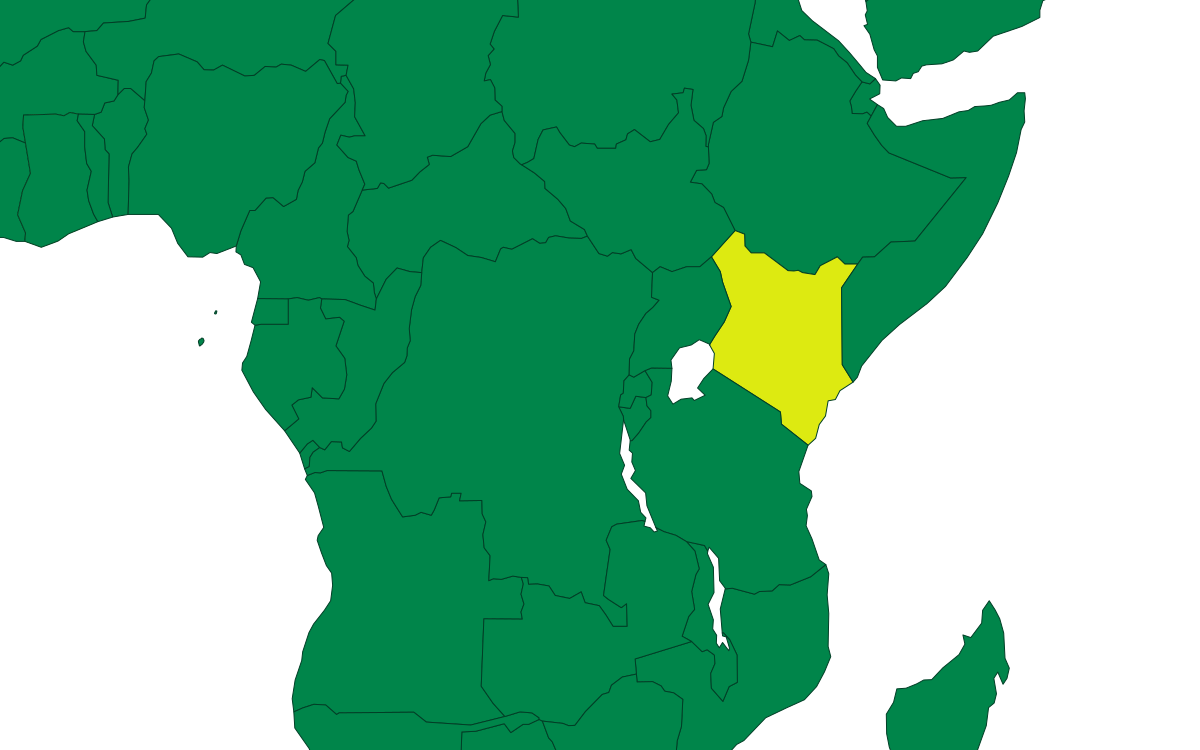
Kenya is home to around 55 million people and is one of the most dynamic countries in Africa. The population is young, with a median age of approximately 20. Over 28 per cent of Kenyans live in urban centres, with the capital Nairobi and the port city of Mombasa growing rapidly. The Human Development Index (HDI), which measures human prosperity in a country, currently ranks Kenya 143rd out of the 193 countries listed, placing it in the upper mid-range of African countries.
Geographically, Kenya provides ideal conditions for solar and geothermal projects, with more than 300 days of sunshine a year and areas containing active volcanoes. At the regional level, Kenya is a founding member and driving force of the East African Community (EAC), which has an internal market of over 180 million people. The long-term goal of the EAC is a political union with a common currency modelled on the European Union (EU).
Hub in East Africa
Kenya is a regional economic hub with access to over 400 million consumers in East Africa. Compared with neighbouring countries, its infrastructure is advanced: the port of Mombasa, the new standard gauge railway between Mombasa and Nairobi and a growing road network all facilitate trade. The government is embracing digitalisation, sustainable agriculture and green energy. Flagship projects include the LAPSSET Corridor, an infrastructure project between Lamu Port, South Sudan and Ethiopia, and Konza Technopolis, a new technology centre south of the capital. Demand for solutions is particularly high in the agritech, fintech, e-commerce and energy efficiency sectors.
Thriving start-up scene
Kenya’s gross domestic product (GDP) grew by around 4.7 per cent in 2024, driven by the agriculture, services and industry sectors. Agriculture, the largest economic sector, accounts for roughly 30 per cent of GDP and offers huge potential for agricultural processing and the use of technology.
The start-up scene is booming: investment in agritech start-ups alone exceeded 400 million US dollars in 2024. The government is specifically promoting local value creation, digitalisation and climate-friendly production. With around 90 per cent of its electricity generated from renewable sources, Kenya is a leader in the green transformation – supported by international programmes such as the Climate Investment Fund. One of the challenges facing the country is its high national debt and the resulting dependence on creditors such as China.
Democratic anchor in the region
Kenya is regarded as a stable democracy with an active civil society and progressive constitution. Kenya is active on the regulatory front: although the Finance Act of 2025 increases duties and taxes, it also creates greater clarity and structure about how imports and investments are handled. Despite a slight improvement, corruption poses the main risk (Kenya is ranked 130st out of 182 in the CPI 2025). The Gini index of 40.8 indicates moderate social inequality, while the Freedom House index categorises the country as ‘Partly Free’ with a score of 49 out of 100. Nevertheless, Kenya remains a stable democratic anchor in East Africa.
Investing in ‘Silicon Savannah’?
Kenya offers companies attractive opportunities to enter the market, especially in future-oriented sectors. These include:
- Renewable energies
- Digital services
- Agricultural technology
- Infrastructure
The young, well-educated population is very attractive for technology-driven industries.
Geopolitically, Kenya benefits from its stable role as a regional hub in East Africa. Despite regulatory challenges, the increasing digitalisation of administration offers opportunities to enter the market efficiently. The growing middle class and vibrant start-up ecosystem are enhancing the positive investment climate.