A ‘showcase’ demonstrates how it’s done
Since 2017, Enapter AG has been relying on highly efficient hydrogen generators – known as electrolysers – to make green hydrogen available at an affordable price. Their patented Anion Exchange Membrane (AEM) technology enables modular, flexibly scalable production that can be used worldwide, replacing large-scale industrial production facilities. With bases in Pisa and Saerbeck, the company manufactures just one ‘core’ size, which means that it is able to produce larger quantities and reduce costs.
The idea originated in Thailand, where founder Sebastian-Justus Schmidt developed the world’s first hydrogen-powered residential building, Phi Suea House. Sunlight and rain fully cover the site’s energy and water requirements, with the help of Enapter’s electrolyser. The pilot project paved the way for Enapter’s approach and mission. Today, the company is one of the industry’s leading players, with over 5,000 systems in around 55 countries.
Hydrogen is tricky
The global hydrogen market is still in its infancy and remains fragile. Hydrogen-based energy storage systems are generally regarded as more expensive than fossil fuels – and the costs are therefore often regarded as prohibitive for the Global South. Transport costs are often underestimated and play a major role here. Enapter’s modular systems are particularly well suited to smaller, decentralised applications, enabling energy to be produced where it is needed. This is ideal in rural areas or in regions where the grid is underdeveloped. Thailand therefore presented itself as a particularly suitable region for further projects.
Building expertise in a market of the future
Since 2022, the Federal Ministry for Economic Affairs and Energy has been promoting green hydrogen in Thailand as part of its International Hydrogen Ramp-up Programme (H2Uppp). H2Uppp helps companies to identify and develop innovative projects to produce and use green hydrogen and Power-to-X applications in emerging and developing countries. Enapter AG and its partners were some of the beneficiaries, receiving support from H2Uppp to set up a training centre in Chiang Mai.
South-East Asia is therefore regarded as a promising future market for green energy. Thailand, for example, aims to achieve Net Zero by 2050. However, the region faces challenges in terms of developing the required expertise and establishing the required infrastructure.
Knowledge transfer and skills development
Since 2023, Enapter has been running a training centre in Chiang Mai, Thailand, in partnership with the Deutsche Gesellschaft für Internationale Zusammenarbeit (GIZ) GmbH, which brings knowledge and technology to the region to support a green hydrogen future.
In collaboration with the Energy Research and Development Institute, Chiang Mai University (ERDI-CMU), Enapter is training local professionals to design, construct and operate hydrogen systems, which will pave the way to building a sustainable energy future in the region.
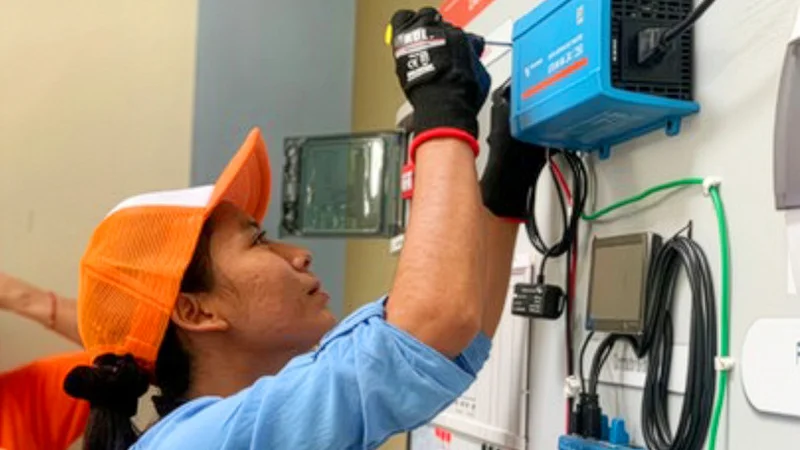
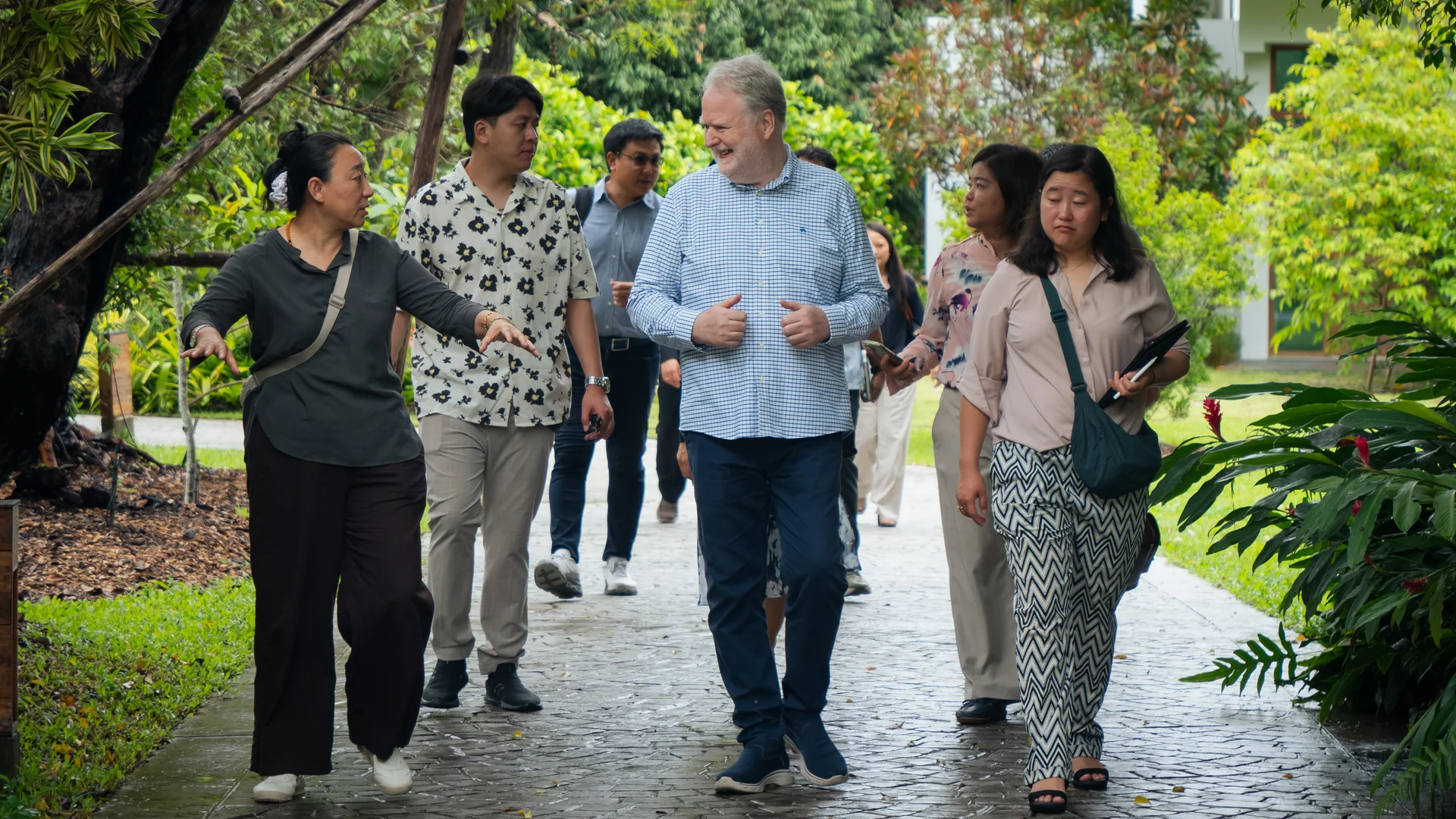
Initially, Enapter and GIZ provided a modern, fully operational hydrogen system in the new hydrogen showcase at ERDI. It is used for training modules on installing, operating and maintaining the system, as well as on the safe handling of hydrogen. The project partners also supported the transfer of knowledge on hydrogen and the training of trainers from Chiang Mai University by international experts.
- To date, approximately 150 people have attended courses at the training centre. Many of them are helping to develop Thailand’s hydrogen infrastructure, for example at the state-owned electricity supplier, the Electricity Generating Authority of Thailand (EGAT).
- The training centre quickly became a hub for energy experts from across South-East Asia who were able to see first-hand the benefits of innovation ‘Made in Germany’. This enabled Enapter AG to forge new business contacts, particularly in Asia.
- Training centres such as those in Chiang Mai help to spread knowledge about technology, which helps to develop the market and reduce prices in the long term. German companies also stand to benefit.
- Thanks to the Enapter project, European technology has established an effective flagship project in South-East Asia.
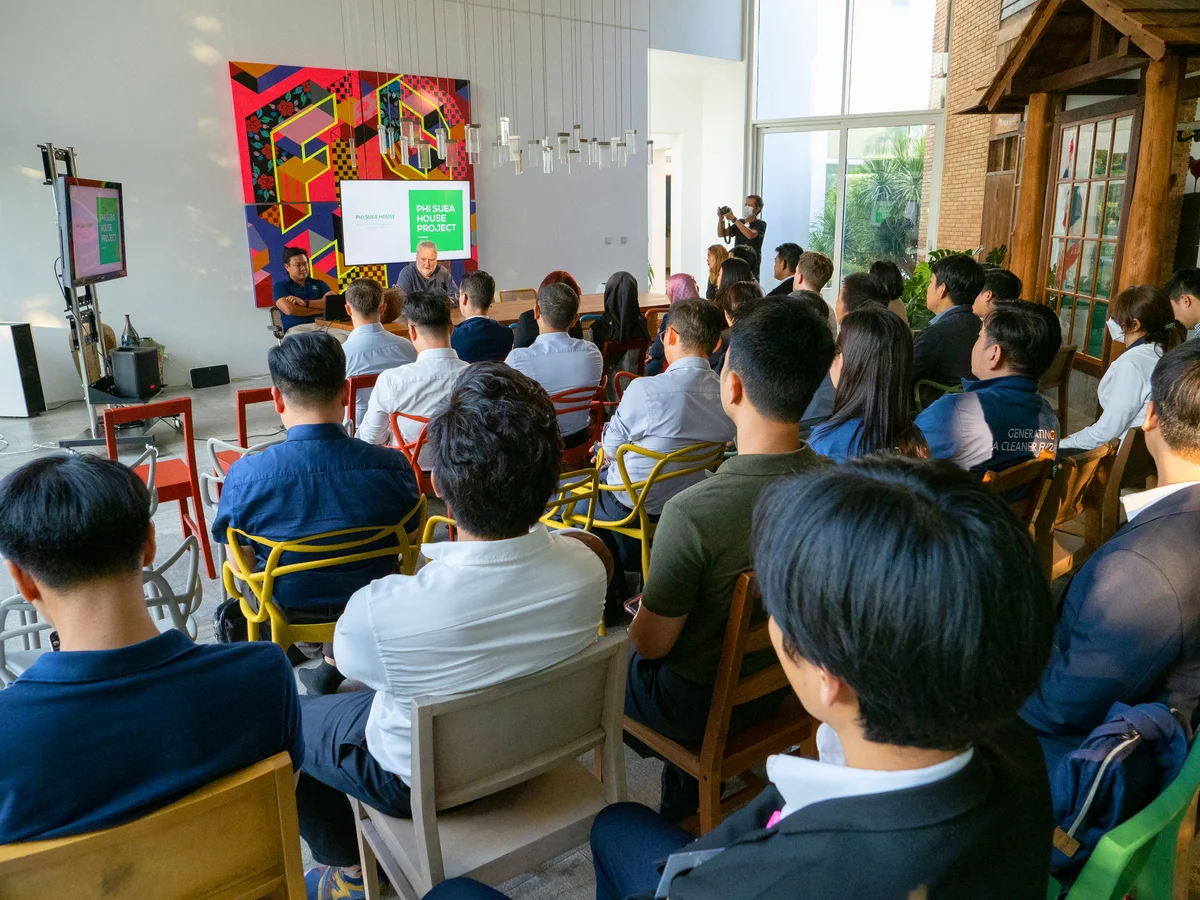
By means of a show home, Enapter AG has successfully demonstrated the effectiveness of the AEM electrolysers in a real-life setting to well over 2,000 representatives from the worlds of politics and business. This impressed project partners.
The interest shown by training participants from a wide range of South-East Asian countries demonstrates the significant role that innovative and sustainable energy technology solutions play in the local market.
The region is therefore becoming an increasingly important market for European technology suppliers, which face stiff competition from Japanese and Chinese competitors, however.
Sebastian-Justus Schmidt sees China as a key driving force behind green energy development, having gone to considerable lengths to push the hydrogen economy in the region, and notes that cost expectations are particularly heightened in Asia.
Enapter AG
Enapter AG supplied the hardware and developed the technology-related training materials, among other things.
Read more
Energy Research and Development Institute at Chiang Mai University (ERDI-CMU)
ERDI’s contributions included running the training courses and providing the premises.
Read more
Deutsche Gesellschaft für Internationale Zusammenarbeit (GIZ)
As part of the International Hydrogen Ramp-up Programme (H2Uppp), GIZ took on the task of developing training courses and training programmes for trainers.
Read more