

Berlin expertise for Ukraine
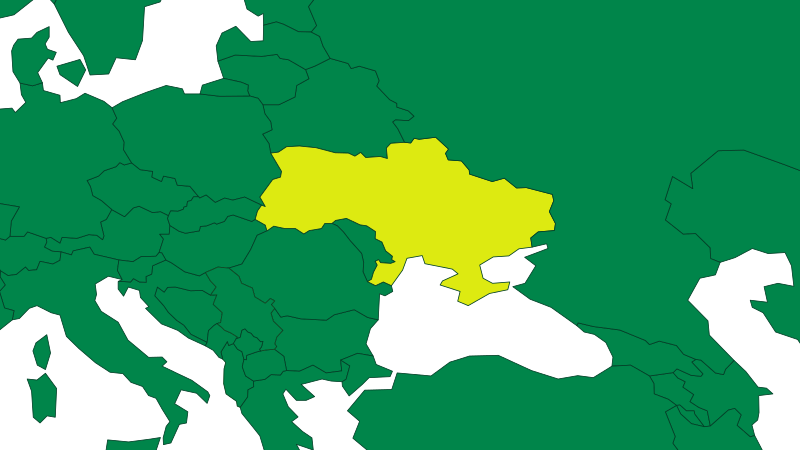
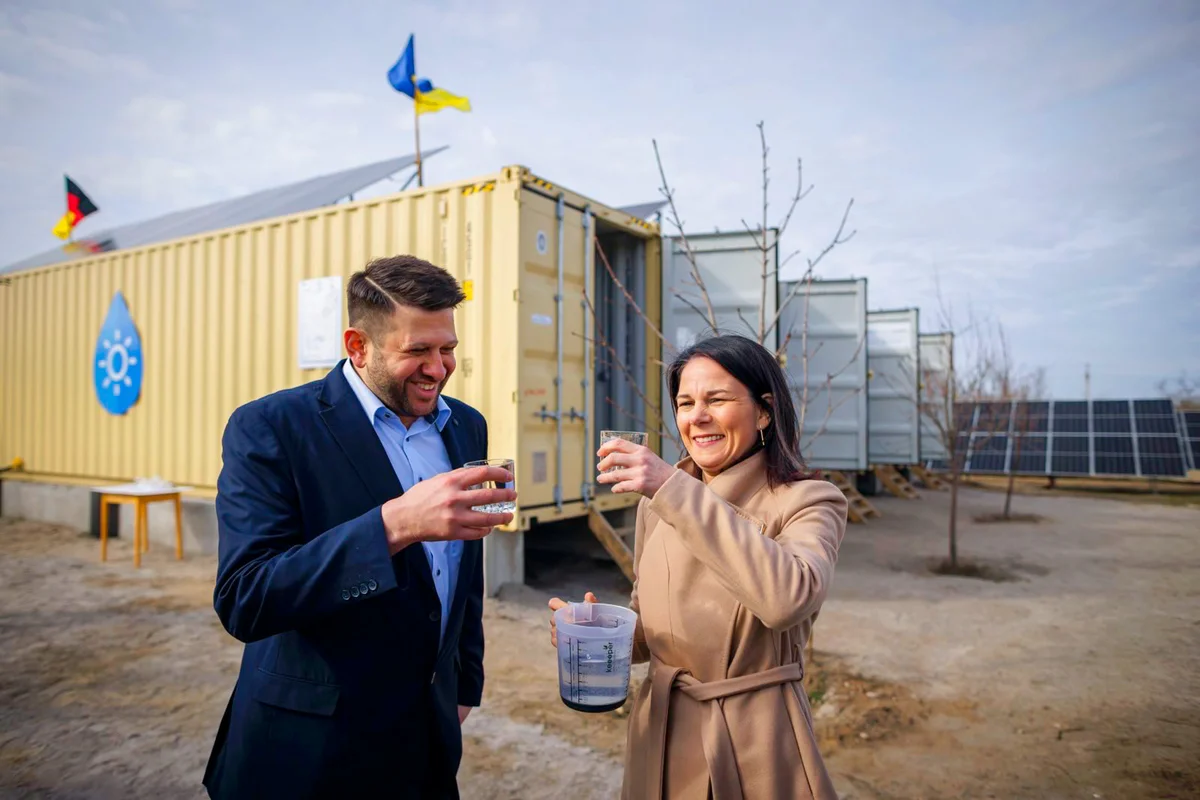
Everyone has the right to affordable, high-quality water for drinking, cooking and personal hygiene. This is the sixth UN Sustainable Development Goal. Since 2014, Berlin-based Boreal Light GmbH, led by Dr Hamed Beheshti, has been developing solar-powered water treatment and desalination plants. In this way, the company helps provide a sustainable drinking water supply for many people around the world. It operates and sells its systems in around 20 countries, including Kenya, Somalia, Peru and Mexico. In 2023, Mykolaiv in southern Ukraine became its first European customer: despite the war, five solar-powered systems now secure clean drinking water for around 500,000 people.
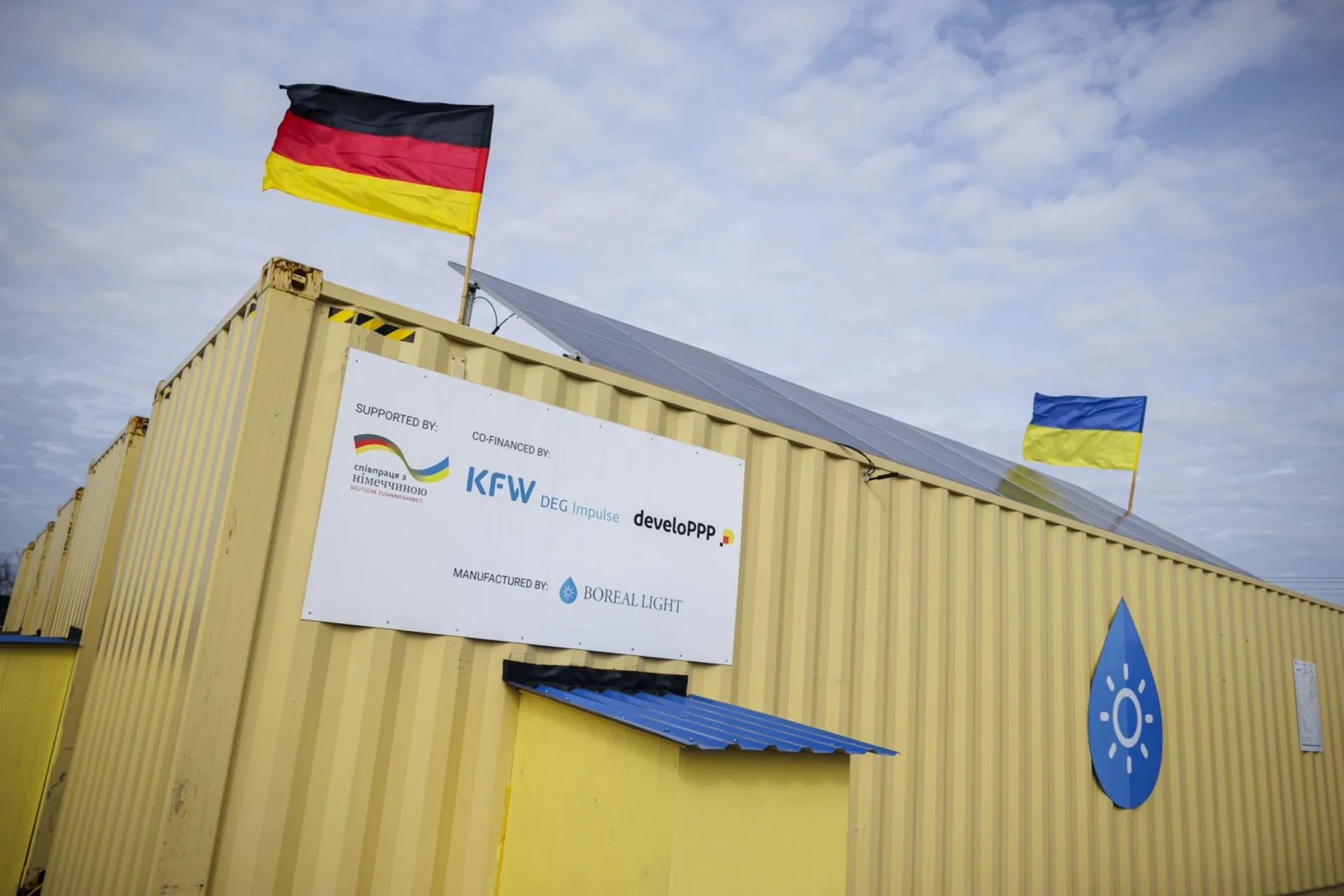
Clean drinking water in a war zone
Russian attacks have destroyed large parts of Ukraine’s infrastructure, including the power grid and numerous water pipelines. In many regions, water is contaminated while power outages occur repeatedly. In addition, the destruction of the Kakhovka Dam on the Dnipro in 2023 severely damaged a key element of the water supply infrastructure.
For around half a million residents of the southern Ukrainian city of Mykolaiv, the lack of clean drinking water became a serious problem. After pipelines were destroyed, many areas were left with only salty seawater or contaminated water from rivers, streams and lakes that was not safe to drink. Conventional treatment and desalination plants can turn this water into clean drinking water, but frequent power outages meant that reliable operation could not be guaranteed under wartime conditions.
Drinking water through solar energy
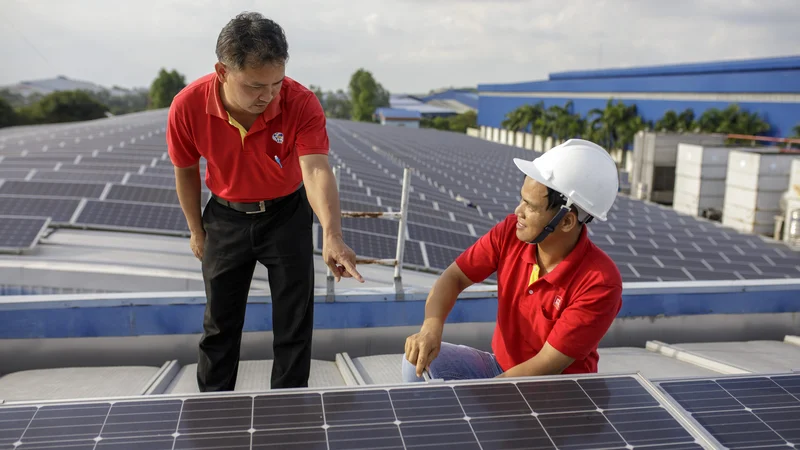
For years, Boreal Light has been developing technical solutions for self-sufficient drinking water supply powered by solar energy. The systems are cost-effective, easy to operate and emission-free. They are already in use at 33 hospitals in East Africa.
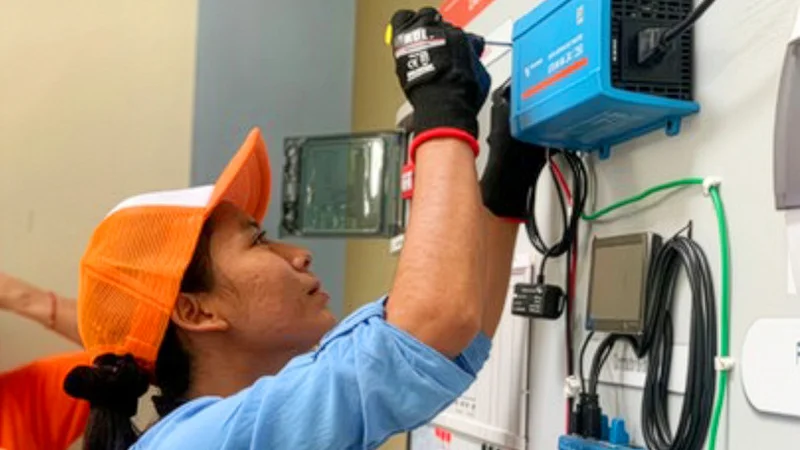
In Ukraine, the technology was adapted to conditions in the war zone: with hybrid operation using solar energy and the power grid, additional heating for sub-zero temperatures, and practical on-site training for local specialists. The result is a system that operates reliably even under extreme conditions and produces clean drinking water every day. Boreal Light is therefore not only helping to stabilise the drinking water supply, but also contributing to the reconstruction of damaged water infrastructure and creating prospects for skilled local employment.
Supported by the develoPPP funding programme
DEG Impulse supported the project with EUR 3.2 million through develoPPP, a programme funded by the German Federal Ministry for Economic Cooperation and Development (BMZ). Boreal Light invested the same amount. Deutsche Gesellschaft für Internationale Zusammenarbeit (GIZ) GmbH organised the transport of the plants from Berlin to Ukraine and also provided support through local networks and contacts.
Operating under wartime conditions
Implementation in the war zone was challenging. The installation was originally scheduled to take ten days, but ultimately took three months. Skilled personnel were in short supply because many technicians had been called up for military service. In some cases, older workers with limited technical experience had to step in. Deliveries of materials were also repeatedly delayed.
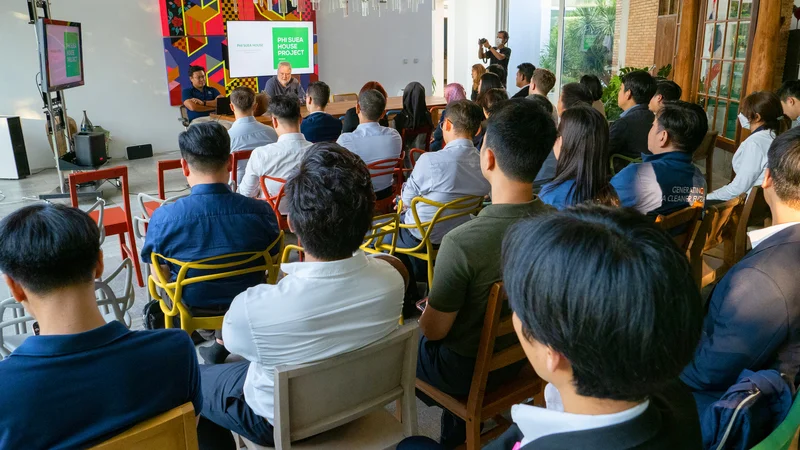
Training sessions originally planned in Berlin had to be cancelled because Ukrainian specialists were not permitted to leave the country. Boreal Light responded flexibly: training programmes were conducted directly in Mykolaiv, and a team from Berlin also travelled to the city to support implementation on site.
- Five solar-powered water desalination plants treat around 125,000 litres of drinking water per hour and supply almost 500,000 people in Mykolaiv with clean drinking water.
- The plants strengthen local resilience to war and crises and contribute to stabilising Ukraine – and therefore indirectly to Europe’s security.
- Ukrainian specialists received training for a sector with strong future prospects.
- Through the project, Boreal Light was able to demonstrate that the technology can also be scaled in Europe.
- The company expanded into regions with high infrastructure needs and positioned itself as a pioneer in climate-neutral water solutions.
- A further 92 cities and municipalities in Ukraine have expressed interest in similar systems.
The Boreal Light example shows how companies can use innovative technologies to make a tangible difference to people’s lives in crisis and war zones – in this case by adapting desalination plants to European winter conditions and ensuring robust operation despite unstable conditions.
It also demonstrates that succeeding in a difficult and unpredictable market requires flexibility, perseverance and strong partnerships – particularly with local authorities and companies.
Despite the challenges, Dr Hamed Beheshti encourages other companies to invest in Ukraine as well. He sees opportunities particularly in the water and electricity sectors.

Boreal Light
Boreal Light develops technical solutions for self-sufficient drinking water supply based on solar energy.
Read more
Deutsche Gesellschaft für Internationale Zusammenarbeit (GIZ) GmbH
GIZ organised the transport of the plants from Berlin to Ukraine and also provided support through local networks and contacts.
Read more
DEG Impulse gGmbH
DEG Impulse provided technical advisory support and funding through the BMZ’s develoPPP programme, with a public contribution of EUR 3.2 million.
Read more